Years after he humiliated me in front of our entire class, my former bully came to me for help. He needed a loan, and I was the only person who could decide his fate. I still remember the smell that day, even 20 years later.
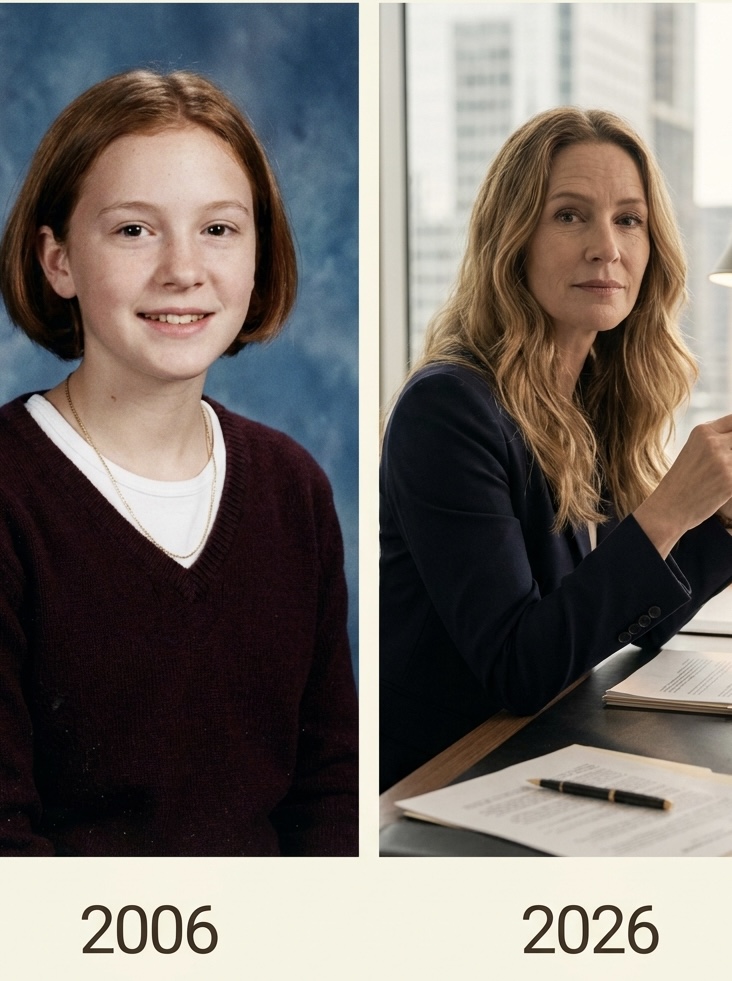
It was industrial wood glue mixed with burnt hair under fluorescent lights. It was sophomore chemistry. I was 16 years old, quiet, serious, and desperate to blend into the back row.
But my bully had other plans. He sat behind me that semester, wearing his football jacket. He was loud, charming, and worshiped.
That day, while Mr. Jensen droned on about covalent bonds, I felt a tug at my braid. I assumed it was an accident.
But when the bell rang, and I tried standing up, pain shot through my scalp. The class burst into laughter before I even understood why. The boy had glued my braid to the metal frame of the desk.
The nurse had to cut it free, leaving behind a bald patch the size of a baseball. For the rest of high school, they called me “Patch.”
Humiliation like that didn’t fade. It calcified.
It taught me that if I couldn’t be popular, I would be powerful. And that’s how I ended up running the regional community bank 20 years later. Now I don’t walk into rooms with my head down.
When the previous owner retired, I bought a controlling interest with investors. Now I review high-risk loans personally. Two weeks before everything changed, my assistant, Daniel, knocked on my office door.
“You’ve got one you’ll want to see,” he said, setting a file on my desk. I glanced at the name. Mark H.
He was from my same town and had the same birth year, I remembered.
My fingers froze on the folder. I didn’t believe in fate, but I believed in irony. And my high school bully was now asking for my bank’s help.
He was requesting $50,000. But his credit score was wrecked, his cards were maxed out, he had two missed car payments, and he had no collateral worth listing. On paper, it was an easy denial.
Then I saw the purpose of the loan: emergency pediatric cardiac surgery.
I closed the file slowly and called Daniel. I asked him to let Mark in. A soft knock, then the door opened.
For a moment, I almost didn’t recognize him when he stepped inside. The varsity linebacker was gone. In his place stood a thin, exhausted man in a wrinkled suit that didn’t quite fit.
His shoulders slumped inward, as if life had pressed down hard. He didn’t recognize me at first. “Thank you for seeing me,” he said, taking a seat.
His voice was quieter than I remembered. I leaned back in my chair. “Sophomore chemistry was a long time ago, wasn’t it?” I said calmly.
He went pale. His eyes flicked to the nameplate on my desk and then to my face. I saw the hope die in his eyes.
“I… I didn’t know,” he whispered. He stood abruptly. “I’m sorry to waste your time.
I’ll go.”
“Sit,” I said. My voice was firm, and he obeyed. His hands trembled as he sat back down.
“I know what I did to you,” he said quietly. “I was cruel. I thought it was funny.
But please… don’t punish her for that.”
“Your daughter?” I asked. “Yes, Lily is eight and has a congenital heart defect. Surgery is scheduled in two weeks.
I don’t have insurance or anything to cover it. I just… I can’t lose my daughter.”
Mark looked so broken at that moment. The rejection stamp sat on the corner of my desk.
So did the approval stamp. I let the silence stretch. He swallowed.
“I know my credit isn’t great. I had some setbacks during the pandemic. Construction contracts fell through, and I haven’t bounced back since.”
I leaned forward and looked at him before signing him up for the loan and stamping it “approved.”
“I’m approving the full amount.
Interest-free.”
His head snapped up. “But,” I continued, sliding a printed contract across the desk, “there is one condition.”
Hope flickered across his face, mixed with dread. “Look at the bottom of the page.”
Beneath the formal terms, I’d handwritten an addendum after reading the loan request.
All that was left was for the legal team to format it into a binding clause. “You sign that, or you don’t get a dime,” I explained. He scanned the page and gasped when he realized what I was demanding.
“You can’t be serious,” he whispered. “I am.”
The clause stated that he would speak at our former high school during their annual anti-bullying assembly, which ironically would happen the following day. He had to describe publicly exactly what he’d done to me, using my full name.
Mark had to explain the glue, the humiliation, and the nickname. The event would be recorded and shared through official school district channels. If he refused or minimized his actions, the loan would be void immediately.
He looked up at me, eyes wide. “You want me to humiliate myself in front of the whole town.”
He stood again, pacing once across the carpet. “My daughter’s surgery is in two weeks.
I don’t have time for this.”
“You have until the end of the assembly,” I replied. “Funds will be transferred immediately afterward if you fulfill the agreement.”
“Claire… I was a kid,” he said weakly. “So was I.”
Silence settled between us again.
I could see the war inside him. Pride versus fatherhood. Image versus reality.
He stared at the contract for a long time. Then he looked up.
“If I do this,” he said slowly, “we’re done?”
“Yes.”
He picked up the pen. For a second, his hand hovered. Then he signed.
As he slid the contract back to me, his voice cracked. I nodded once, and then he left. I sat there mulling the conversation over.
For the first time since I was a teenager, I felt something close to fear. Not of him, but of what I was about to relive. Either way, the following day would decide who we both became.
The following morning, I walked into my old high school right before the assembly. The building hadn’t changed much. The principal, Mrs.
Dalton, greeted me near the auditorium doors. “We appreciate your involvement in the anti-bullying initiative,” she said warmly. “It means a lot to our students.”
“I’m glad to support it,” I replied.
But that, of course, wasn’t the whole truth. The auditorium buzzed with students, parents, and faculty. The annual assembly had grown since our time there.
A banner stretched across the stage that read: Words Have Weight. I stood near the back, arms crossed, exactly where I could see him without being seen immediately. Mark stood offstage, pacing.
He looked worse than he had in my office. His hands flexed at his sides as if he were a man preparing to walk into fire. For a brief second, I wondered if he’d run.
Mrs. Dalton stepped to the microphone. “Today we have a guest speaker who wants to share a very personal story about bullying, accountability, and change.
Please welcome Mark.”
Polite applause followed. Mark walked onto the stage as if each step weighed 10 pounds. He cleared his throat at the podium.
He introduced himself and explained that he’d graduated from the school decades ago. “I played football and was popular. I thought that made me important.”
He paused.
I saw his internal debate. He could soften or generalize it. Talk about mistakes without specifics.
No one in that room, except me, knew the full story. Then he spotted me at the back and swallowed hard, knowing what he was risking. Slowly, he explained that in his sophomore year, I was in his chemistry class.
My chest tightened. “I glued her braid to her desk,” he said. Gasps rippled through the crowd.
“I thought it was funny, and that humiliating her would make people laugh, and it did. The school nurse had to cut her hair. She had a bald patch for weeks.
We called her ‘Patch.’ I led that. I encouraged it.”
He gripped the sides of the podium. “It took me years, but I now know it wasn’t a joke.
It was cruelty.”
The room was silent now. Students who had been slouching were sitting upright. “I never apologized or understood what that did to her.
I told myself we were just kids. But that wasn’t true. We were old enough to know better.”
His voice cracked.
“I carried that arrogance into adulthood. I built my identity on being strong and untouchable. But strength without kindness isn’t strength.
It’s insecurity.”