Prologue: The Dinner That Drew a Line in the Sand
There are nights that split a life neatly in two: before and after. I’m Hope Mendoza, 68, a widow, a retired teacher, a woman who has always chosen peace over pride. That evening, I realized there’s a difference between compromise and surrender—and that dignity isn’t something you beg for.
It’s something you protect.
A House Built of Work and Quiet Love
My home sits on a quiet, tree-lined street in Chicago—wood floors that creak familiar songs, walls that remember laughter, a garden Anthony and I planted when our hands were younger and our dreams were bold. He’s been gone five years now, taken too soon by an illness that arrived like lightning and left a silence that moved into every room.
I kept going the way steady people do: baking bread, mending curtains, polishing memories until I could bear to look at them. I missed the noise. I missed us.
Homecoming: A Promise of Voices in the Halls
When my son, Edward, called to say he was retiring from the military and needed a place to land with his family, I cried in the pantry so no one would hear. I fluffed pillows, scrubbed corners, and baked two loaves of bread that made the whole house smell like mornings we used to know. Edward arrived thinner, with the far-away eyes of a man who has seen too much.
Dylan, 17, hugged me with his grandfather’s softness. Sarah, 15, barely looked up from her phone. And Linda—the wife with perfect hair and a smile that hovered politely above her face—surveyed the home like a realtor.
“Thanks for having us, Hope,” she said. “Just until we find our footing. Then we’ll get our own place.”
Within an hour she insisted on the master bedroom—my room—where Anthony breathed his last and I learned how to sleep alone.
I gave it up without protest. I told myself it was kindness. Maybe it was habit.
The Table, the Stew, the Sentence That Broke the Room
I made beef stew, the one from my mother’s stained recipe card. I set out the good china, lit candles, opened a bottle Anthony and I had saved for a day that never came. Steam rose like a blessing.
Silverware chimed. Dylan helped serve. Edward’s tired smile warmed the edge of the table.
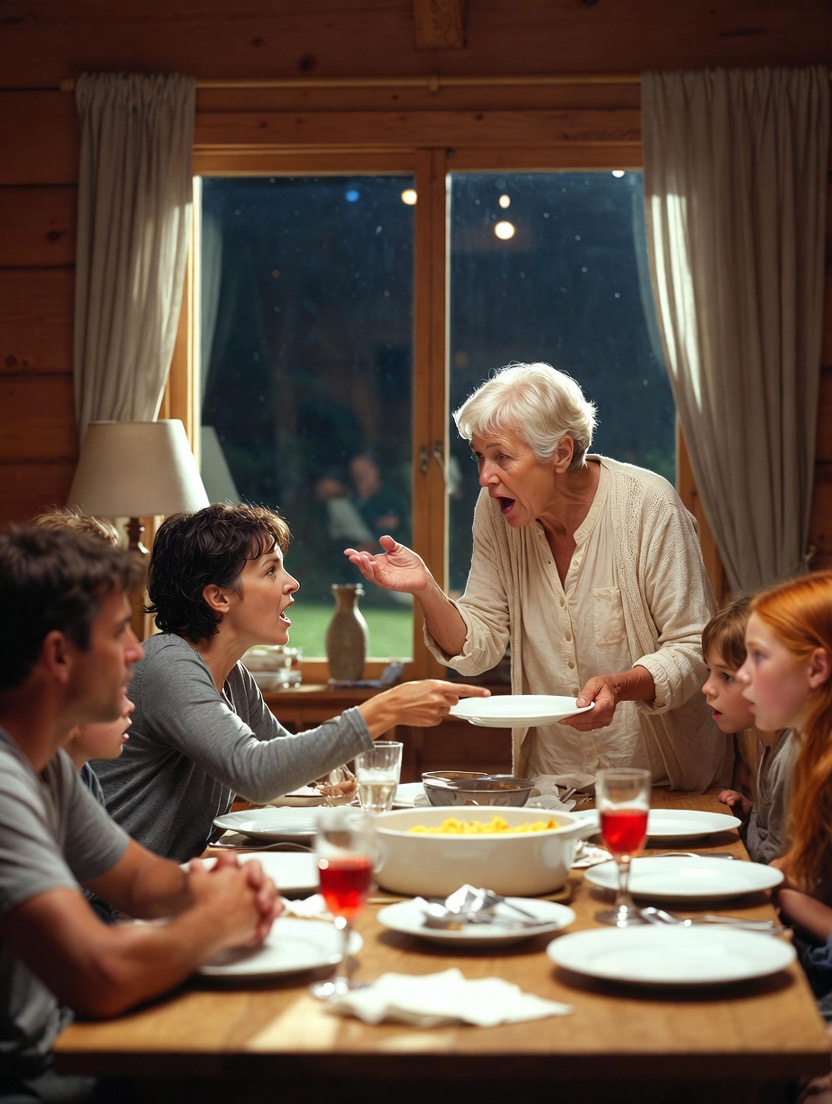
Then Linda’s fork fell with a crack. She stared at me—cool, steady, unblinking. “I’m the one in charge of this house now.
Take your plate and go eat outside with the dogs.”
Time froze. Dylan’s fork slipped. Sarah smirked, then faltered.
Edward—the boy who once defended a kid being bullied in fifth grade—stared at his stew and said nothing. Humiliation burns. But what hurt more was the silence of my son.
I could have cried. I didn’t. Something older than fear and tougher than pride stood up inside me.
Protocol Sunrise
I smiled—calm, thin, unbreakable. I stood, took the cordless phone, and dialed a number I knew as surely as prayer. “Gabriella,” I said when she answered, “the time has come.
Activate Protocol Sunrise.”
I sat. I ate my stew. Linda’s perfume sharpened.
Edward found his voice. “Mom? Who was that?”
“You’ll understand tomorrow,” I said.
“Please eat. It will get cold.”
That night, I sat with my dogs in the garden and scratched their ears. “Things are going to change,” I whispered into their warm fur.
“I remember who I am.”
How a Widow Learns the Law
Two years after Anthony died, I met Dolores at a parish grief group—sharp-eyed, funny, nobody’s fool. She introduced me to her niece, Gabriella Santos, an attorney who had rescued Dolores after her eldest son took her house “for tax reasons” and moved her to a care facility she hadn’t chosen. “We seniors are vulnerable,” Dolores said, pouring coffee with a steady hand.
“The world treats us like burdens or prizes. Kindness isn’t a contract.”
That night I didn’t sleep. I thought of Edward’s gentle suggestions that I sell, of Linda’s appraising glances, of the empty side of the bed, and of fear disguised as practicality.
A week later, I signed documents in a quiet downtown office.
The New Dawn Foundation
We created a nonprofit: The New Dawn Foundation. I placed my house and Anthony’s life insurance policy into the foundation’s care.
Terms:
- I live here for life as Executive Director.
- Any sale, lease, or mortgage requires board approval.
- The board: Gabriella, Dolores, Father Michael from our parish—and me.
A good neighbor, Robert Gutierrez—retired police officer, widower, and the keeper of a thousand helpful tools—became an early donor. “Anthony would want you safe,” he said. “And your kindness to shelter others.”
Quietly, we began helping other seniors protect homes and futures.
We didn’t make speeches. We drew up papers. And we prepared an emergency plan in case “kindness” walked in wearing sharp heels: Protocol Sunrise.
The Morning After the Breaking Point
I slept well. Calm is what you feel when you stop asking for permission from people who don’t plan to give it. At dawn, a text from Gabriella: All set.
10 AM.
Linda came downstairs in silk and certainty. “About last night,” she said, staring into her coffee. “I was stressed.
I shouldn’t have said that.”
That was not an apology. It was a weather report. “Linda,” I replied, evenly, “you said exactly what you meant.
And in doing so, you made a very serious mistake.”
The doorbell rang.
Revelation in the Living Room
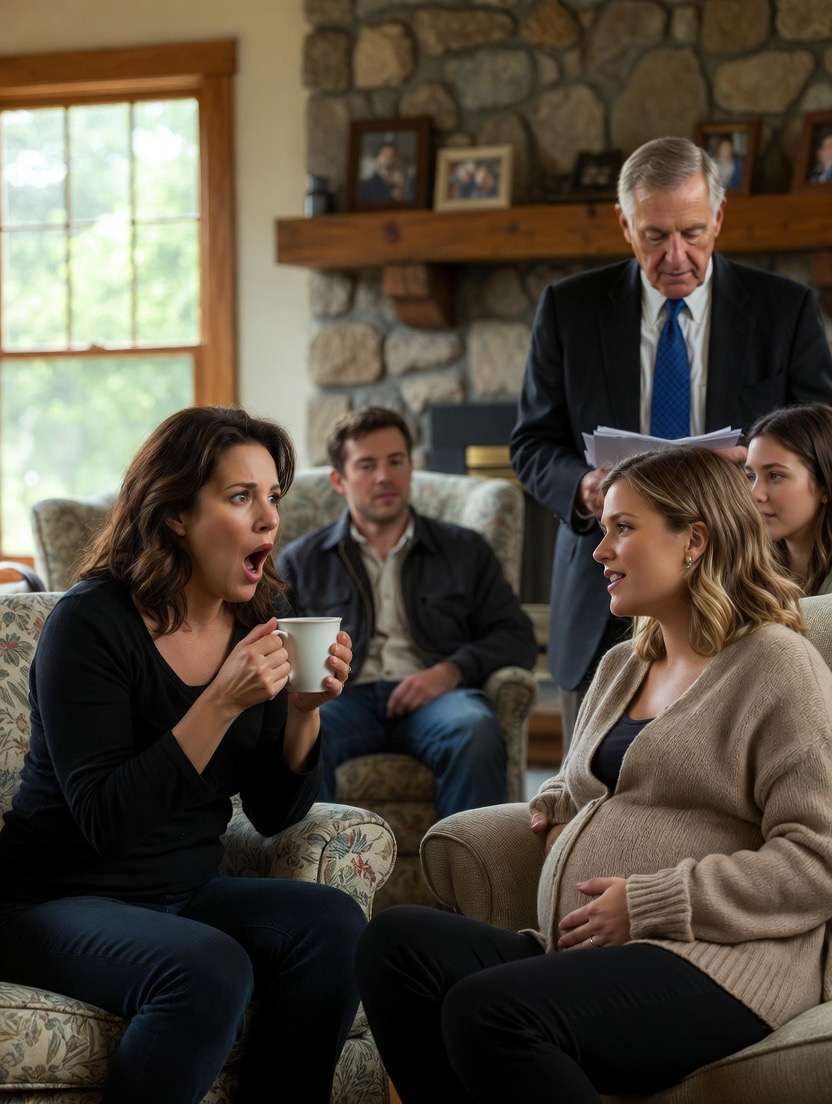
I opened the door to Gabriella with her briefcase, Robert with his quiet authority, and a notary. Edward came down in pajamas, startled.
Dylan hovered, alert. Sarah put her phone down for the first time since arriving. We gathered in the living room where we had once opened Christmas gifts with tearing paper and delight.
Gabriella spoke with the clarity of a bell. She explained the foundation, the deed, the bylaws, the life residency, the board oversight. She placed certified copies on the coffee table like chess pieces in winning formation.
“In summary,” she concluded, “this property belongs to the New Dawn Foundation. Mrs. Mendoza is guaranteed lifetime residence as its executive director.
Anyone else must either sign a lease with fair market rent or vacate within thirty days. Exceptions require board approval.”
Silence pressed in. “This is a scam!” Linda snapped.
“Edward, do something! We need to have her declared incompetent.”
“Ma’am,” Robert said softly, which sounded somehow more dangerous than a shout, “I would choose your words carefully. These documents have been in force for five years.”
Dylan watched me, his jaw set, a decision forming.
Sarah looked scared, finally looking like fifteen and not thirty-five. Edward whispered, “Mom… why? Why didn’t you trust me?”
That hurt more than anything.
“This is not about not trusting you,” I said. “It’s about protecting me—and others like me—from systems, pressures, and fear. And Edward… last night, when I needed your voice, you chose silence.”
He looked down.
Sometimes remorse speaks without words.
A Third Way
“I don’t want to divide this family,” I continued. “There’s a third option: you can stay temporarily without rent—if you accept conditions.”
Gabriella raised an eyebrow; this was not in the plan.
I nodded. “The conditions are simple,” I said. “Respect.
For this house, for our roles, for me. I am not a servant in my own home. I am the director of the foundation that keeps this roof steady.
We will set boundaries and schedules. We will speak like adults. If you agree, you can stay while you find work.”
A long breath went around the room like wind circling a tree.
Cracks and Light
Linda packed. She left to stay with her sister, taking Sarah with her. The taxi door thudded like a gavel.
I stood in the doorway, sad but not sorry. Edward and Dylan stayed. In the soft days that followed, the house learned a new rhythm.
Edward sent resumes, took interviews, relearned civilian mornings. Dylan began volunteering at the foundation—listening, fetching forms, creating spreadsheets, making tea just right. He met a widow named Margaret and a widower named Albert, both strong, both weary, both grateful.
He found purpose. One night, Edward and I sat in the kitchen—the room that forgives us most. “I wouldn’t have taken your house, Mom,” he said.
“I know what you want to believe,” I answered gently. “But pressure makes strangers of us all. That’s why we use paper.
Paper remembers when hearts forget.”
He nodded. We washed dishes side by side, and we didn’t need more words.
A Letter and a Changing Heart
A week later, Edward handed me an envelope.