The Philanthropist of the Year
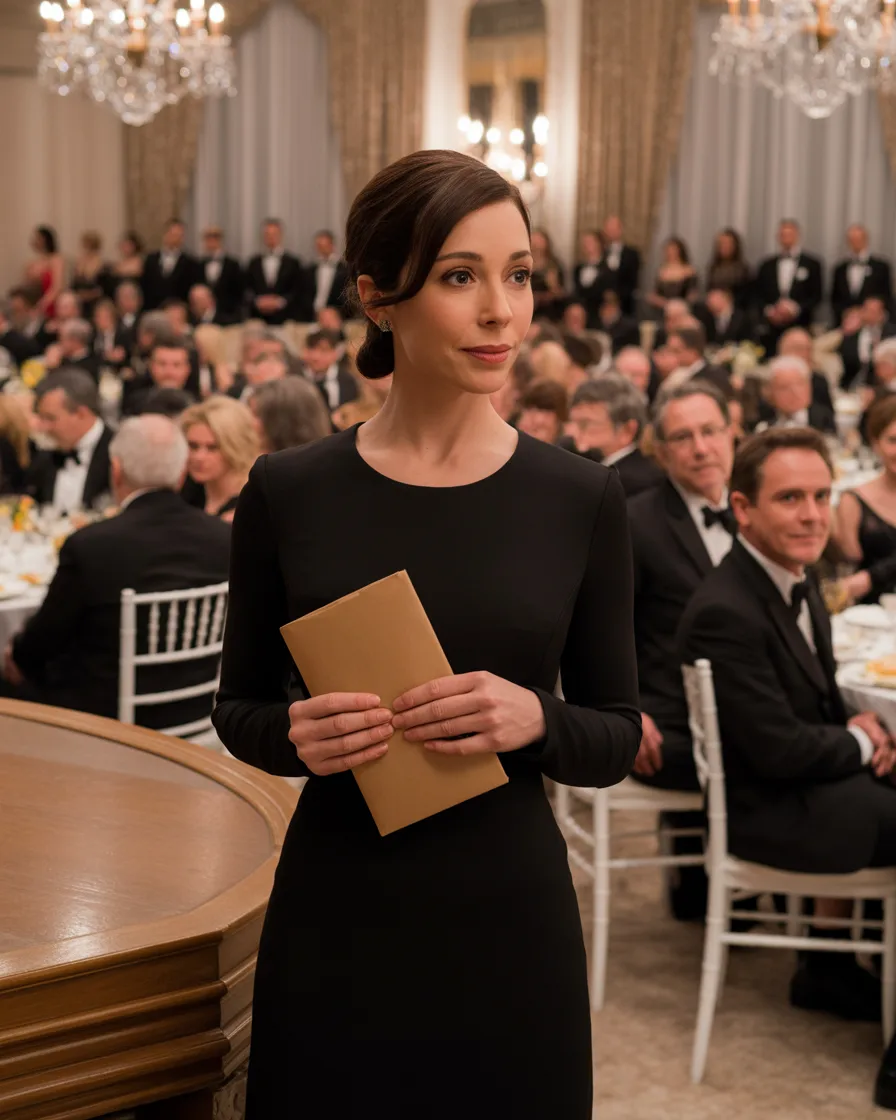
By the time Judge Carter said my name, Vanessa Crowe had already lifted her chin to the angle she used whenever she expected a room to admire her. The ballroom at the Crescent Bay Hotel glittered in gold and crystal. Waiters in white gloves moved between tables.
A string quartet rested beside the dance floor. Two hundred twenty guests in tuxedos and gowns had spent the last hour applauding speeches about justice, ethics, service, and generosity. Vanessa wore champagne silk and old confidence.
She sat at table three with one hand resting near her collarbone, smiling at the giant screen where a video montage had just finished calling her a champion of community giving. Beside her sat Khloe, radiant and smug, already halfway into her own future as the daughter of the room’s newest saint. I was at the back in a simple black dress Vanessa had approved because, in her words, there was no reason for me to make a statement tonight.
She was wrong about that too. When Judge Carter stood from the podium and said, “Before we present this year’s award, Ms. Bianca Riley has asked to address the room on a matter directly relevant to this honor,” the first thing I noticed was not Vanessa’s face.
It was the silence. A legal crowd knows the sound of normal applause. It also knows the sound of trouble walking toward a microphone.
I rose, picked up the sealed manila envelope from my table, and felt every eye in the ballroom settle on me. Vanessa turned. Her smile did not disappear all at once.
It thinned first, then tightened, and then — for the first time in as long as I had known her — I watched uncertainty enter her expression before she could stop it. I had imagined that moment many times over the previous eighty-three days. Let me tell you what those eighty-three days followed.
My mother died of ovarian cancer when I was seventeen. Five months from diagnosis to gone. She was the only person in our house who saw me clearly — not as an asset or a liability or a reflection of someone else’s choices, but as a person with her own particular shape.
After she was gone, my father vanished into work and grief so thoroughly that sometimes I felt I was living alongside a polite ghost. He provided. He signed checks.
He nodded when spoken to. But he stopped noticing what was happening directly in front of him. Two years later he married Vanessa Crowe.
Vanessa entered our lives like a woman arriving at a hotel she intended to redesign. All elegance and soft tones at first — she baked things people complimented, remembered birthdays, touched elbows when she laughed. Friends called her gracious.
My father called her a gift. What she really was, I learned slowly, was strategic. She never pushed me out in one dramatic act.
She did it in inches. My mother’s china was moved to storage because it felt too heavy. My childhood bedroom became Khloe’s dressing room while I was away at college because I was hardly ever home.
Family photos were taken after I had supposedly already left, even when I hadn’t. Khloe’s tuition was paid in full because she was still finding her footing, while I worked under fluorescent library lights, interned during the day, studied at night, and learned that praise for my independence usually meant no one intended to help me. Whenever I noticed the imbalance, Vanessa said the same line with a sympathetic smile.
“You’ve always liked being independent.” It was astonishing how often my father let that sentence do the work of an apology. Eventually I stopped trying to win tenderness from people who preferred convenience. I built a life elsewhere.
Studied finance because numbers were honest in ways people rarely were. Graduated summa cum laude. Joined a consulting firm in San Diego, worked brutal hours, saved obsessively, and lived in a one-bedroom condo long after I could have upgraded just because I liked the feeling of being underestimated by everyone except my brokerage account.
Over twelve years I built enough to buy the one thing that felt less like a purchase and more like a promise kept. The beach house in La Jolla. White stucco with black iron lanterns, a wraparound terrace looking west into open water.
Six bedrooms, floor-to-ceiling glass, pale oak floors. My mother used to point at houses like this from the passenger seat when I was a teenager and say, half-joking and half-dreaming, “One day, Bianca, live somewhere the windows remember light.”
She never got to. I closed in March of 2025.
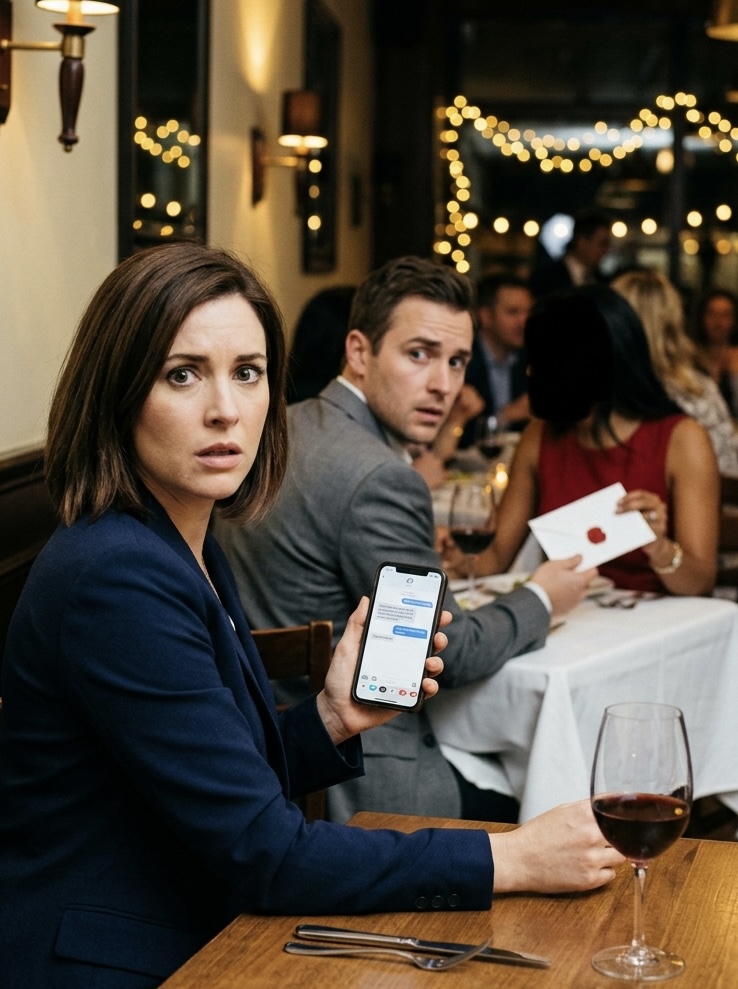
The first night I slept there, I woke up smiling because for the first time in years the ceiling above me belonged entirely to me. Then, at 11:47 that same night, my phone rang. Vanessa did not say congratulations.
She informed me, in the tone people use to confirm catering arrangements, that she and my father would be moving in the next day. Khloe had seen the house in the background of an Instagram story and told her everything. “We’ll take the master,” she said.
“Khloe wants the ocean-view room down the hall. You can use one of the back bedrooms. And if that’s a problem, Bianca, you’re free to stay somewhere else.”
For a moment I thought I had misheard.
“Put Dad on the phone,” I said. “He’s asleep,” she replied. Then, with the small sigh she used when positioning herself as the reasonable one: “Don’t be difficult.”
I looked through the terrace doors at the dark water and felt something inside me go entirely still.
I told her I’d make sure everything was ready. Then I ended the call and dialed my father. He answered immediately.
He was not asleep. When I told him what Vanessa had said, there was a silence so complete I could hear him breathing. Then he said, slowly, that Vanessa had told him I’d invited them for a weekend visit.
He thought it was impromptu, maybe even generous. He sounded confused. Embarrassed.
Tired. That was the moment the story stopped being about real estate. Months earlier, during a lunch after his cardiac procedure, my father had mentioned that Vanessa was helping organize estate documents and asked whether I knew a good attorney to review them.
I sent him to Adrien Cole, a former colleague turned estate lawyer whose caution bordered on professional suspicion. After their meeting, Adrien called me privately and said one deed transfer in a preliminary packet bothered him. The signature looked almost right, which in his profession was worse than wrong.
But because my father hadn’t yet accused anyone of fraud, the file had stalled. After Vanessa’s midnight call, I phoned Adrien at 8:02 the next morning. “Pull everything.”
By noon we had county records, secretary of state filings, and enough smoke to justify looking for fire.
The fire was Vanessa. An LLC registered in her name six months earlier. A deed transferring my father’s Del Mar property into that LLC.
A home-equity credit line opened using his identity. Retirement withdrawals routed through accounts he didn’t control. And, once Adrien obtained the first subpoena through a related civil action, something uglier: a pattern of charitable donations made in Vanessa’s name with money traced back to those fraudulent transfers and withdrawals.
That was how she had been building her polished philanthropic reputation. She wasn’t generous. She was laundering vanity through stolen money.
When Adrien laid the papers across his conference table that first afternoon, my father came in halfway through the meeting looking ten years older than he had the week before. He sat down, stared at the side-by-side signatures, and said nothing for a long time. Then he asked to see the bank records again.
I watched his face move through confusion, disbelief, and something I can only describe as private ruin. His hands trembled once when he reached the retirement withdrawals. “I never signed this,” he said.
Adrien nodded. “That is our conclusion. But we need to move carefully.”
The sensible thing might have been to confront her immediately.
Throw her out. Change the locks. But white-collar predators survive by destroying evidence before anyone knows they’re being watched.
If Vanessa suspected we had found anything, accounts could empty by dinner and documents could vanish by dawn. So we let her keep talking. The next afternoon she arrived at my beach house with monogrammed luggage, designer shopping bags, a garment rack for gala dresses, and the confidence of a woman who believed every door would keep opening for her because it always had.