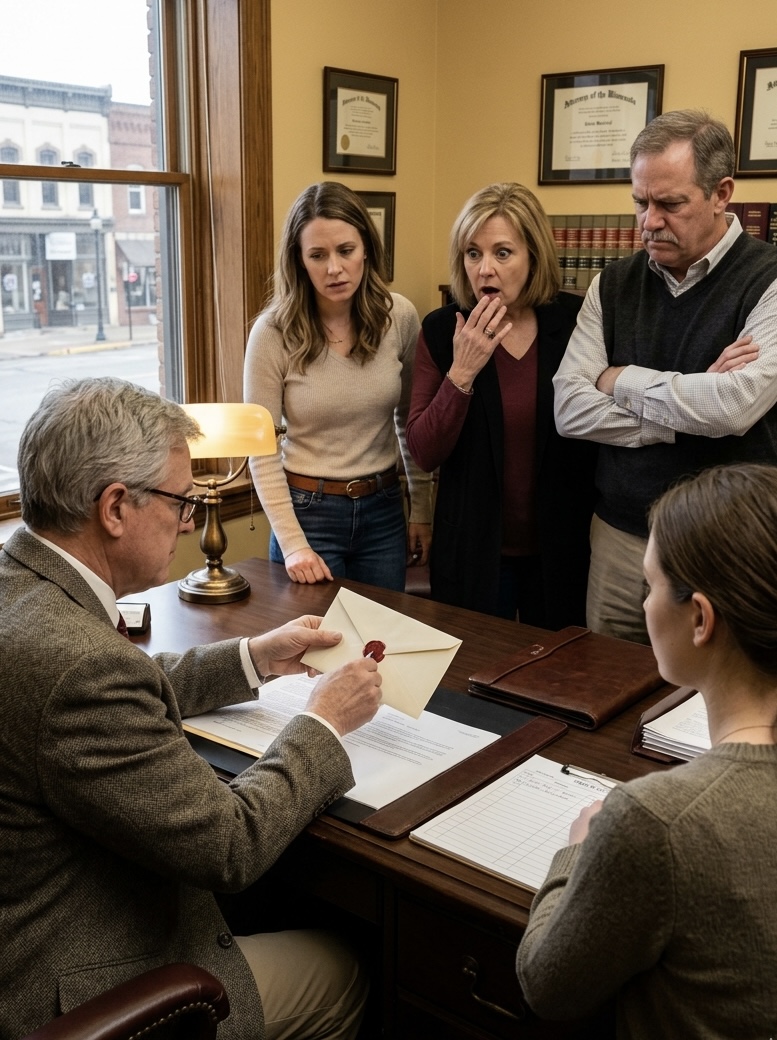
Forty-eight thousand dollars for Olivia’s college tuition. Twenty-three thousand for her wedding. Seventeen thousand for a minivan. Seventy-five thousand toward her house down payment. Fourteen thousand in daycare assistance. Multiple credit card rescues for my parents. Roof repairs on their house, paid in full. The total came to just over three hundred thousand dollars.
Olivia stopped crying. The tears dried up so abruptly it was almost mechanical. My mother lost color. My father stared at the documents like they had betrayed him personally.
Ruth’s letter continued. She wrote that she was leaving her estate to me because she was done watching the same imbalance repeat itself. Olivia had already received a substantial portion of family resources in advance. I had received expectations, hand-me-downs, and praise for being easy. She said she would not allow her final act on this earth to become one more reward for the people who had always expected me to live on less.
Whitfield read on. Ruth had written that I had never once asked her for money. Not when I was paying student loans on a starting salary that barely covered rent. Not when my landlord raised the rent by three hundred dollars. Not when my car died and I took two buses and a train to work for three months. I had asked for recipes, advice, old family stories, and once for the name of the rose she grew by the front porch. She wrote that people always notice the child who asks loudly. They rarely notice the one who learns to need quietly.
Then came the line that cut deepest of all. Ruth wrote that if anyone claimed she had been manipulated, they should ask themselves why it felt more believable that an old woman had been tricked than that she had simply seen the family clearly and made her choice.
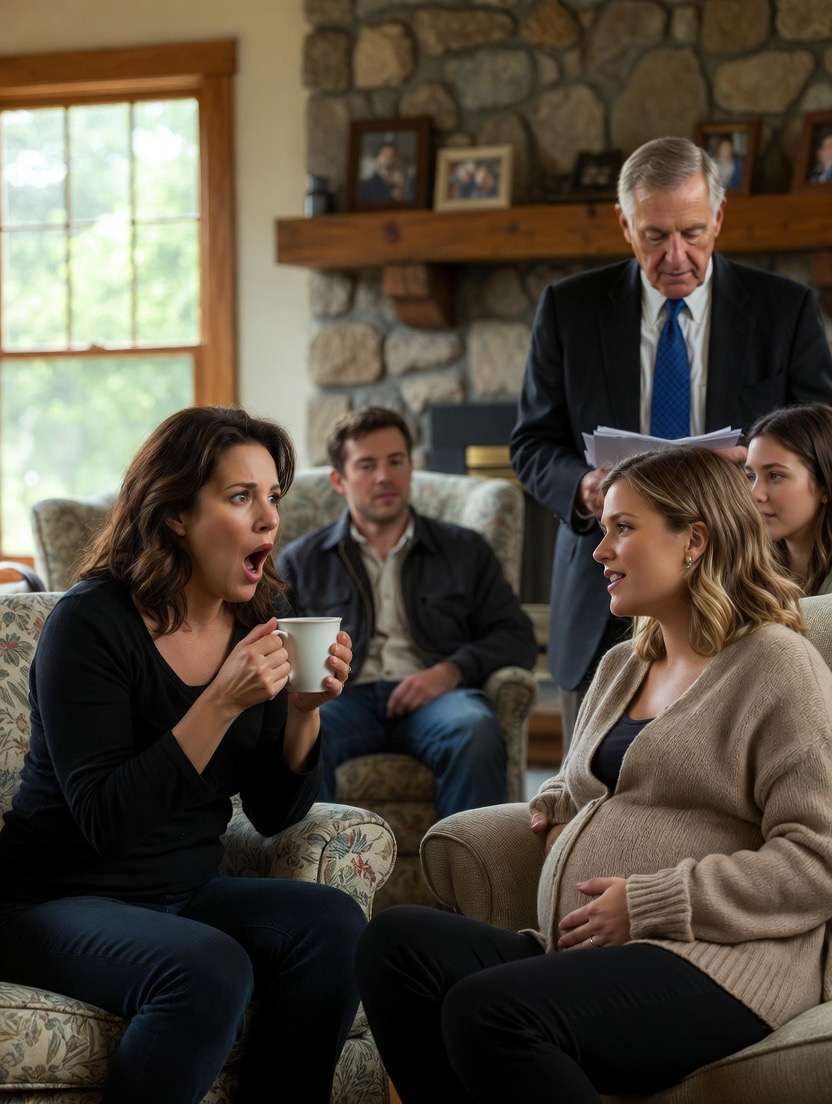
My father stood up so fast his chair hit the wall behind him. My mother said it was petty to keep a running tally. Olivia snapped that children changed everything, that I would not understand because I had no one depending on me.
I looked at her and, for the first time in years, felt no urge to soften myself. I told her that her children were not a receipt she could hand me for reimbursement. I told my parents that being the daughter who managed on her own had never made me less deserving. It had only made them more comfortable taking from me.
Whitfield quietly added that Ruth had instructed him to issue formal cease-and-desist notices if harassment continued. The meeting ended badly, because it was always going to. My father called me ungrateful in the hallway. Olivia said she hoped I enjoyed buying a life with blood money. My mother walked out without looking back.
But none of it landed the way it once would have. Their words hit a surface that had changed while they were not paying attention.
Whitfield gave me a smaller envelope, separate from the legal file, addressed in Ruth’s handwriting with my name on the front. I did not open it until I was sitting alone in Ruth’s kitchen.
The house smelled faintly of cedar and tea and the lemon hand cream she rubbed into her knuckles every winter. I stood with my hand on the back of her chair for a long time, because grief, real grief, the kind that matters, is often delayed until the room is quiet enough to hear it.
Her note was only two pages. She wrote that she was sorry she had not protected me more loudly when I was younger. She knew who got funded and who got lectures. She knew who got indulgence and who got told to be sensible. And then, in one line that made me sit down and cry the way I had not cried since I was a child, she wrote: “Choose yourself at least once, darling. No one ever taught you how.”
The harassment did not stop immediately. Whitfield mailed the cease-and-desist letters on Monday. The messages slowed almost overnight. The legal contest Olivia had threatened never materialized.
Silence settled where obligation used to be. No check-ins. No birthday calls. No awkward Sunday dinners. It turned out that when money was removed from the conversation, so was most of my family.
I could not keep the house permanently. My life was in Chicago. The following spring, I sold it to a young couple expecting their first child. I kept the rosebush by the porch alive through the winter, and in April, I took a cutting for the flight home. I planted it in a heavy terra-cotta pot on my condo balcony, where by June it produced three small red blooms that smelled exactly the way Ruth’s front walk had smelled in July.
I paid off the remainder of my mortgage. I padded my retirement accounts. I enrolled in weekend painting classes at an art studio near the lake. I also used a portion of the estate to establish a modest scholarship fund in Ruth’s name at a local arts program for girls whose families could not or would not pay for extra lessons. When the paperwork was finished and the first recipients had been notified, I sat in my car and cried again, but this time it was not only grief. It was the strange, clean relief of turning an old wound into something that might spare somebody else the same scar.
Almost a year passed before my mother reached out again. She mailed a Christmas card with no note inside, just a glossy family photo. I stood over my recycling bin for a long time with that card in my hand. I tucked it into a drawer with the rest of the things I was not ready to define.
On nights when doubt still creeps in, I unfold Ruth’s letter and read the line that mattered most. She was not giving me more because I needed more. She was giving it to me because I had been asked to live on less for far too long, and she refused to let that be the final word.
That was the real inheritance. Not the house. Not the accounts. But the proof that at least one person had seen the family clearly, seen me clearly, and chosen me anyway.