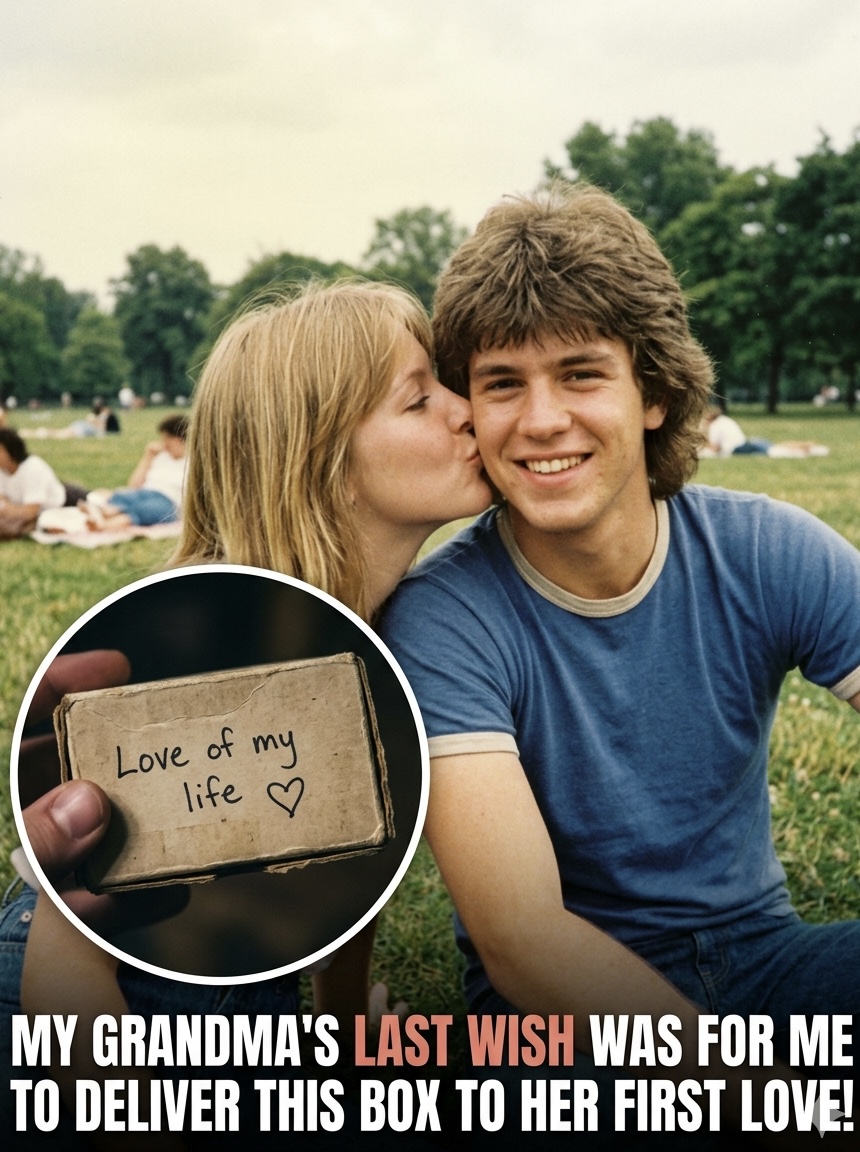
In it, my grandmother confessed to Bradley that after they were separated, she discovered she was pregnant with his child, but she was completely alone, terrified, and had no idea how she would survive.
She wrote that, in those days, she had no choice but to give up the baby, and that decision haunted her for the rest of her life.
At the end of the letter was a sentence that made me burst into tears right there in the car:
“I lost both of you in the same year.”
I sat there until my windows fogged and my chest hurt from crying.
It took several days, old records, a few phone calls, and one kind librarian who listened to my story with wet eyes. Eventually, I found him living alone in a small house by a lake after losing his wife years earlier.
When he opened the door, I knew before he said a word.
He had the same sad eyes my grandmother wore when she spoke his name.
“Are you Bradley?” I asked softly.
His face tightened. “Who’s asking?”
“My name is Dayna,” I said, holding up the box. “Rosalie sent me.”
The second he saw the box and realized who it was from, his hands started trembling.
“Rosalie,” he breathed, as if her name had been waiting behind his teeth for decades.
His home smelled like pinewood and black coffee. I placed the box on his kitchen table, and he touched the lid with two fingers, almost reverently.
“She kept them?” he murmured.
I frowned through my tears. “You knew?”
Bradley did not answer right away. Instead, he walked to a closet in the hallway and pulled out an identical box.
When he set it beside hers, I felt the room tilt.
Inside were hundreds of letters, too, only these were letters he had written to my grandmother throughout his entire life without ever sending them.
“I wrote when I missed her,” he said, his voice breaking. “So, almost every day.”
His face crumpled in a way I will never forget. He lowered himself into a chair and held the photograph as if it were made of glass.
“I would have come,” he whispered. “God, Rosalie, I would have come.”
A few days later, Bradley called me quietly.
“Dayna, would you take me to see her?”
When he walked into her room, my grandmother stared at him in disbelief for a moment before bursting into tears like a young girl.
He crossed the room slowly. “Hello, Rosie.”
She reached for him with both hands. “You came.”
“I should have come sooner,” he replied, kneeling beside her bed.
For hours, they held hands, read their old letters to each other, and talked about their first love as teenagers. They laughed about wildflowers, old songs, and one rainy afternoon when he had kissed her under a broken bus shelter.
From that day on, Bradley barely left her side.
During the final months of my grandmother’s life, he stayed with her constantly, bringing her flowers, reading his old letters aloud, and sitting beside her bed every evening as though he were trying to make up for all the decades they had lost.
The night before she passed away, I heard her whisper, “I waited for you in my own way.”
“And I loved you in mine.”
After she passed away, he continued writing letters to her.
Every single week, he drove to the cemetery, sat beside her grave, and left a new envelope among the flowers.
Because after all those years, loving her that way had simply become part of who he was.
But here is the real question: When love is buried under decades of silence, regret, and missed chances, do you honor a promise without asking questions, or do you open the past and risk discovering a truth powerful enough to change everything you thought you knew?