I just let the truth catch up.”
“You were always so difficult, Solen,” she hissed. “So correct. You just don’t understand family.”
“Maybe not your kind,” I replied, and ended the call.
That evening, I got a call from a banned number. A hushed breath, followed by a cautious voice. “Solen?
It’s Marsha. I worked with your aunt, Cecile.”
My hand squeezed around the phone. Aunt Cecile, the only one who ever stood up to my father, died a decade ago from unspecified “natural causes.” She was quietly removed from the family history.
“I have something Cecile left for me,” Marsha explained. “She instructed me to deliver it to you if the time ever came. “I think it’s time.”
Inside was a single unmarked thumb drive.
Back at home, I hooked it into a laptop that was not linked to the internet. The file was labeled CECILE_AUDIO_2011. I pressed play.
First, static. Then, footsteps. And then, my father’s voice, clear as day.
“So, here’s the plan. We call it a family trust. The girls’ names go on the docs to keep it looking clean.
We push the real assets through the construction shell company, then tuck the money under the new trust. Only Logan gets the codes. We don’t need the girls digging.”
“Solen won’t even notice.
She’s too busy being noble.”
My breath got locked in my throat.
I listened to the remainder. They mentioned faked paperwork, bogus invoices, and shifting monies in little amounts that fell just short of the legal reporting requirements. I found the trust paperwork that I had copied.
There it was: my signature, faked on a document I had never seen. It wasn’t simply betrayal. It was a strategy.
Just before midnight, I sent the audio recording to three people: Dorian, my IRS contact, and Maelis. Five minutes later, my sister sent me an SMS. Three words.
What the hell?
She sagged against the wall. “They told me you left because you were selfish,” she whispered. “That you were angry because you weren’t named in the first trust.”
“I didn’t even know there was a trust until last year,” I said.
“I thought I was the favorite,” she said, her voice cracking. “But I was just… useful. The face they wore to hide their secrets.” She looked at me.
“You have a choice,” I said quietly. “You can help me bring it all to light.”
“I’m done protecting monsters. Whatever you need, I’ll sign it.”
The emergency court hearing was two days later.
My father, his lawyer a smug shark in a silver tie, argued that I was an “emotionally unstable” daughter acting out of vengeance. When it was my turn, I rose and faced the judge. “Your Honor,” I said, my voice steady.
“When I froze the trust, it wasn’t because I was angry. It was because I finally had proof.”
My lawyer submitted the forged documents and then requested to play the audio file. My father went pale.
My mother stared at the floor. The judge looked directly at my father. “Mr.
Devo. Is that your voice?”
He stammered. “I… that could be… yes, but—”
“That’s sufficient,” she cut him off.
“Motion denied. The freeze remains. Furthermore, I am referring this entire matter for immediate review by federal authorities.”
As I walked out of the courtroom, my father’s voice, sharp and low, followed me.
“You think you’ve won?”
“No,” I said. “I think I’ve just begun.”
Two days later, around dawn, the IRS invaded the family property. I saw it in a photo Dorian supplied of cardboard evidence boxes being hauled down the front steps and labeled with our family’s history.
That evening, the doorbell rang. Maelis stood there with a heated casserole dish. “I made lasagna,” she explained quietly.
“It was your favorite.”
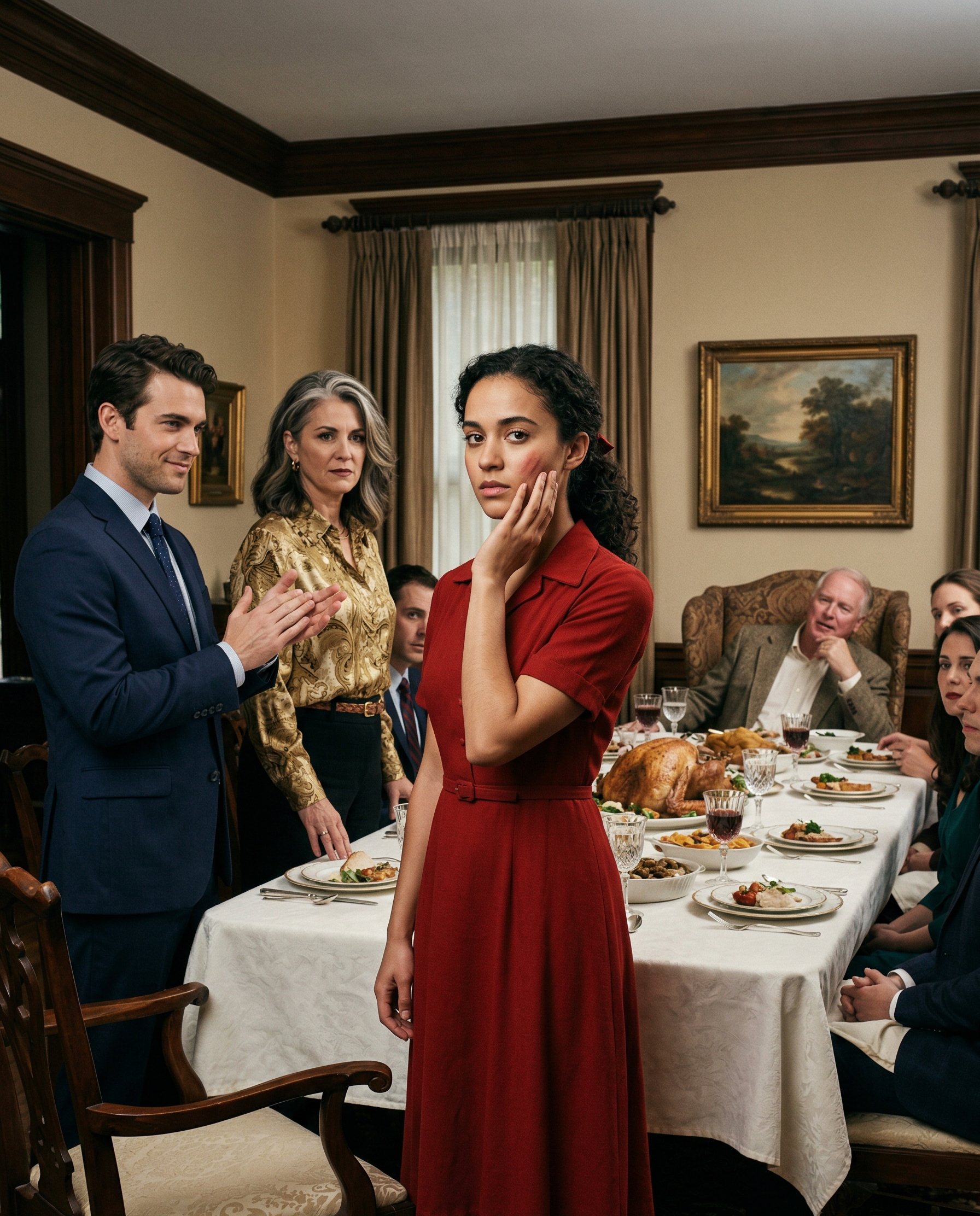
We ate in near silence. She told me she had dealt with our mother that afternoon. “I asked her if she ever loved either of us,” Maelis whispered.
“And?”
“She slapped me.” Her voice was flat, devoid of emotion. “I just turned around and left.”
When she was gone, I checked my mailbox.
My grandfather’s handwriting.
My hands trembled as I opened it.
A letter and a USB drive fell out. If you’re reading this, Solen, the letter began, then you’ve already proven stronger than I ever was.
I saw how they clipped your wings. I wanted to intervene, but I was a coward.
So, I created a separate provision, one that bypasses them entirely. Everything I built in Vermont—the land, the trust, the cabin—it’s all yours. Not because of blood, but because you saw people clearly and still chose to be kind.
The final statement was one he used to murmur to me during summer storms at the cabin: “Build something that lasts longer than anger.”
I plugged in the drive. A video of my grandfather appeared, which had been recorded years ago. He looked into the camera, as if he were looking directly at me.
“If you’re watching this, kiddo,” he said, his voice raspy, “then they’ve done what I feared. I’m sorry I didn’t stop it. But you… you stood up.
You made them show who they were. So I left you real instructions. The Vermont Trust, it’s yours.
Always was. Don’t spend your life proving them wrong. Just live like you were right all along.”
The screen faded to black.
A few of weeks later, I drove to Vermont. The cabin was just how he’d left it. I placed his letter on the mantle, behind a tiny brass lantern.
This was now mine, not an inheritance but a foundation. I utilized the monies to establish a discreet foundation in his name, which provides financial literacy and legal assistance to young women with complex family histories. Maelis joined me, working on spreadsheets and making coffee without ever asking for credit.