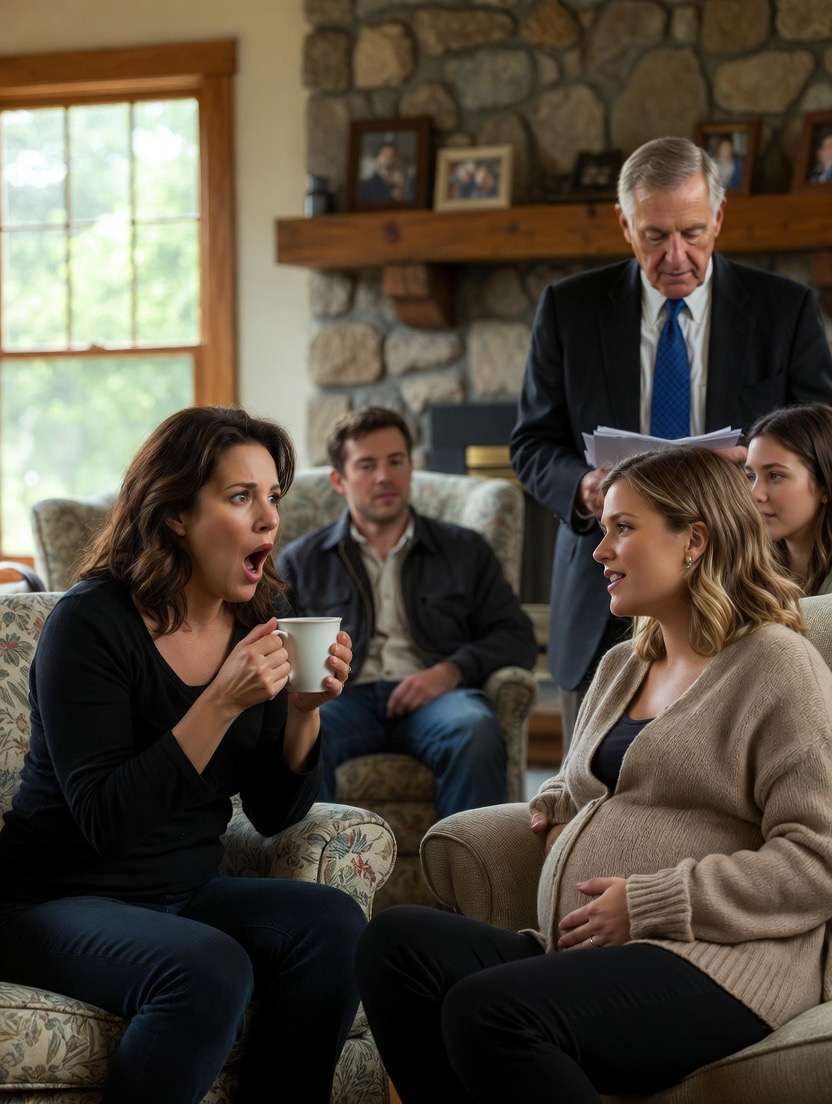
Jennie’s chin came up. “That’s not what it looks like,” she shrieked from the front row. But no one around her was looking at her the way they had a minute ago.
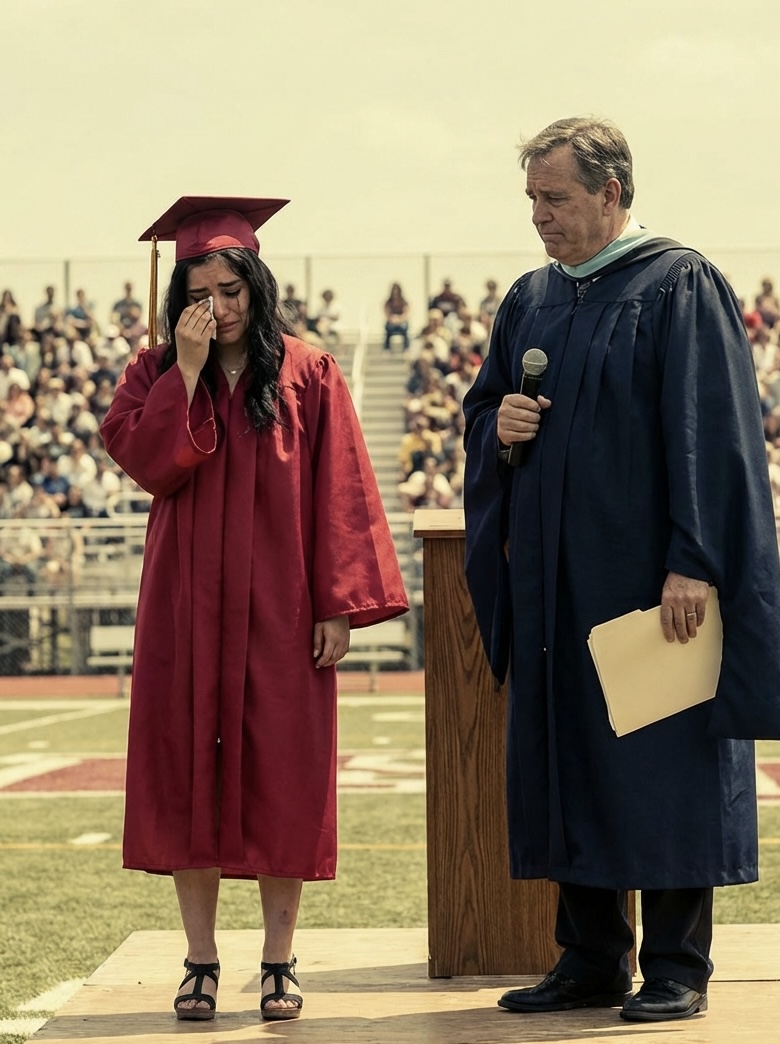
“After noticing Maya’s absence,” the principal revealed, “I visited the house personally. What I observed gave me serious concern. A neighbor also confirmed that Maya had been kept home that day and was not permitted to attend school.”
The murmur stopped.
The field was so quiet I could hear Maya’s breath beside me as she tried to hold herself together. “It’s true,” Maya finally confirmed. “I wasn’t allowed to go.
I wanted to. I tried. Everything in that video is real.”
I stepped closer and put my hand on her shoulder.
“You don’t have to say anything more,” I told her softly. A murmur moved through the crowd, low at first, then spreading row by row as people leaned forward, trying to understand what they were seeing. Jennie tried to defend herself.
“I was doing what was best for…”
Staff from the edge of the stage moved toward her. Officers who had been positioned outside came forward. Jennie’s voice continued as she was guided away, but it was already losing its footing.
And just like that, the grip she had held over Maya’s life since her father passed away walked out of that field. Maya stood beside me shaking, and I held her steady, and neither of us said a word until it was over. Then the principal turned back to face us.
“Ms. Carter, your decision came from genuine concern for this student.”
I nodded. “But it crossed a professional boundary that this institution takes seriously,” he finished.
“I know, Sir,” I said. “And I’m sorry for that.”
He held out the folder. “Open it together.”
Maya’s hands were trembling as she lifted the cover.
Inside was not a termination notice. It was a scholarship document. The Resilience Scholarship, awarded in recognition of academic merit and personal circumstances.
There was also a letter addressed to me. A formal warning, clear and direct, but it acknowledged my intent, stating that while my actions had crossed a line, they had been driven by care, not negligence. Maya stared at her scholarship.
“I got this?” she whispered. “You earned it,” the principal said. She turned and held onto me, and around us, applause started slowly and built until the whole field was part of it.
That evening, Maya sat at my kitchen table with a cup of tea between her hands. “Thank you, Ms. Carter,” she said softly, not looking up at first.
“I don’t think any of this would’ve happened without you.”
“You did the hard part,” I said. “I just made sure it counted.”
Maya shook her head slightly. “Still… I don’t think I would’ve made it here on my own.”
“You won’t have to.
I’ve already been in touch with your aunt. She’s coming for you.”
Maya looked up then, something steadier in her eyes than I’d seen in a long time. Two days later, her aunt, Grace, pulled into my driveway.
She stepped out and wrapped both arms around Maya the moment she reached her. “You’re coming home with me,” Grace said. Maya looked back at me over her shoulder.
“You’re going to be okay,” I told her. Maya smiled. “I know I am.”
I watched the car pull away down the street.
Maya didn’t look back again, and that was right. She was already looking forward. She didn’t just walk across that stage.
She walked into a life that finally belonged to her. My 15-year record is no longer untouched. I’ve made peace with that.
Because fairness isn’t always about following rules exactly. Sometimes it’s about refusing to let those rules walk away from someone who deserves better. And if I ever had to choose again, I already know my answer.
I wouldn’t look away.