A separate packet for the family accountant in case anyone tried to claim the car on taxes. Another for the mortgage lender. Another for myself.
I had spent too long living in improvisation, fixing crises before they became disasters. I was done reacting. I was building exits.
Then Sunday came. I was alone at my kitchen table, drinking coffee, reading messages from strangers thanking me for saying what they had only ever whispered to themselves. That was the strangest part.
The support. I had spent years feeling like the difficult one, and suddenly dozens of people were telling me I sounded like them—calm, dependable, taken for granted until they stopped providing. At 11:14 a.m., the doorbell rang.
I knew before I looked. My parents. Chloe.
My mother holding a box with both hands like peace could be packaged in cardboard. My father in his good polo shirt, the one he wore when he wanted to appear reasonable. Chloe in oversized sunglasses, standing half a step behind them as if she could act fragile into forgiveness.
I opened the door but didn’t invite them in. My mother lifted the box. “It’s everything,” she said quickly.
“The title copies, the account closures, the receipts, the forms. We’re fixing it.”
No apology first. Just paperwork.
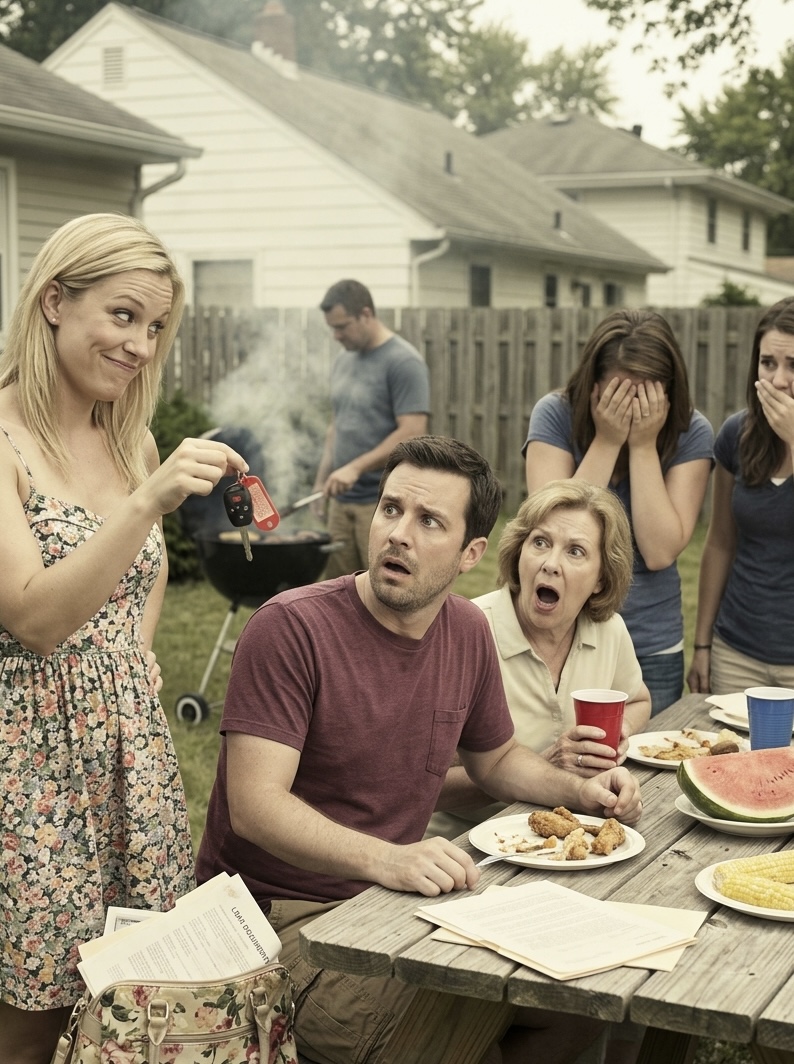
That almost made me laugh. Adults don’t take out debt in your name and wait for you to discover it over burgers. They started saying all the expected things.
They loved me. They were under pressure. Grandma got confused.
Chloe needed help. They thought I’d understand. They never meant for it to go this far.
My mother even cried softly, with practiced restraint, the way she always did when she wanted emotion to look sincere. Then Chloe said the line I had been waiting for. “We were a family before all this.”
All this.
As if the damage began when I noticed it, not when they did it. I stepped outside and closed the door behind me so the conversation stayed in the daylight. I looked at my father first.
“You didn’t lose a son over a misunderstanding,” I said. “You lost the man you trained to stay useful at any cost.”
Then my mother. “You didn’t lose peace.
You lost access.”
Finally Chloe. “You didn’t lose a car. You lost the belief that I would keep financing your life because silence was easier than honesty.”
For a moment, no one spoke.
My father’s face hardened. My mother looked stunned. Chloe looked like she had been confronted with her own reflection.
Then my mother whispered, “So this is really it?”
And there it was. Not remorse. Not accountability.
Just disbelief that the door had actually closed. I nodded. “There’s no dramatic ending,” I said.
“No family summit. No reset. I’m not cutting you off because I hate you.
I’m doing it because I finally respect myself more than I fear disappointing you.”
That landed. They left without a scene. No shouting.
No final threat. Just a car door closing and tires pulling away from a house they no longer had the right to treat like an extension of their control. I went back inside, reheated my coffee, and sat at the same table where I had nearly broken weeks earlier.
And for the first time in my life, I felt no need to explain myself to anyone. That was the real ending. Not the repo.
Not the LinkedIn post. Not the legal file. Freedom.
The kind that arrives quietly after years of being emotionally rented out to people who called it love.