He didn’t go to his weekly ride with the veterans group. He canceled his plans to lead the Memorial Day ride. His bike sat untouched in the garage, gathering dust for the first time since he’d rebuilt it.
But I also started making calls.
To Janet’s son, who’d taken the video. To other witnesses. To Harold’s riding buddies from the veterans group.
And to my nephew, who happens to be a civil rights attorney.
What I learned made me furious. Harold wasn’t the first. In the past six months, seven other older bikers had been pulled over, hassled, humiliated.
All after speaking at that city council meeting. All warned about their “dangerous” bikes. Two had already sold their motorcycles.
This wasn’t about noise.
This was about image. The mayor’s son and his fancy development friends wanted to “clean up” the town’s image, and that meant pushing out anyone who didn’t fit their vision of suburban perfection.
Well, they picked the wrong wife to mess with.
I organized quietly at first. Coffee with the other wives, casual conversations at the grocery store.
Within a week, I had a network of very angry women whose husbands had been targeted. By the second week, we had a plan.
The night before the next city council meeting, I told Harold I was going to the store. Instead, I drove to the VA hospital, where I’d arranged to meet with Dr.
Patricia Reeves, the head of psychiatric services.
“Mrs. Mitchell,” she said, greeting me in her office. “I got your message.
How can I help?”
I explained everything – the stop, the humiliation, Harold’s withdrawal, the threat. Her face grew darker with every word.
“Do you know how many of our patients rely on motorcycling as therapy?” she asked when I finished. “How many veterans find peace on two wheels?
What they did to your husband… it’s unconscionable.”
“Will you speak at the city council meeting?” I asked. “They need to hear from someone with authority.”
She didn’t hesitate. “I’ll do better than that.
I’ll bring data. Statistics. And maybe a few other people who’d like to share their thoughts.”
The morning of the meeting, Harold noticed I was dressed up.
“Going somewhere special?” he asked over breakfast.
“City council meeting,” I said casually.
“Want to come?”
He shook his head. “I’m done fighting that battle, Nan.”
“That’s fine,” I said, kissing his cheek. “But I’m not.”
What Harold didn’t know was that his entire riding group was planning to attend.
Along with their wives. And Dr. Reeves with a contingent from the VA.
And my nephew with a folder full of civil rights violations. And Janet’s son with his video, now edited with commentary from legal experts about police procedure.
The council chamber was packed. Standing room only.
A sea of leather vests, military patches, and determined faces. When the mayor’s son stood to present his expanded noise ordinance proposal, he faltered at the sight of the crowd.
I spoke first, my voice steady despite my nerves.
“My name is Nancy Mitchell. My husband Harold has served this community for forty years.
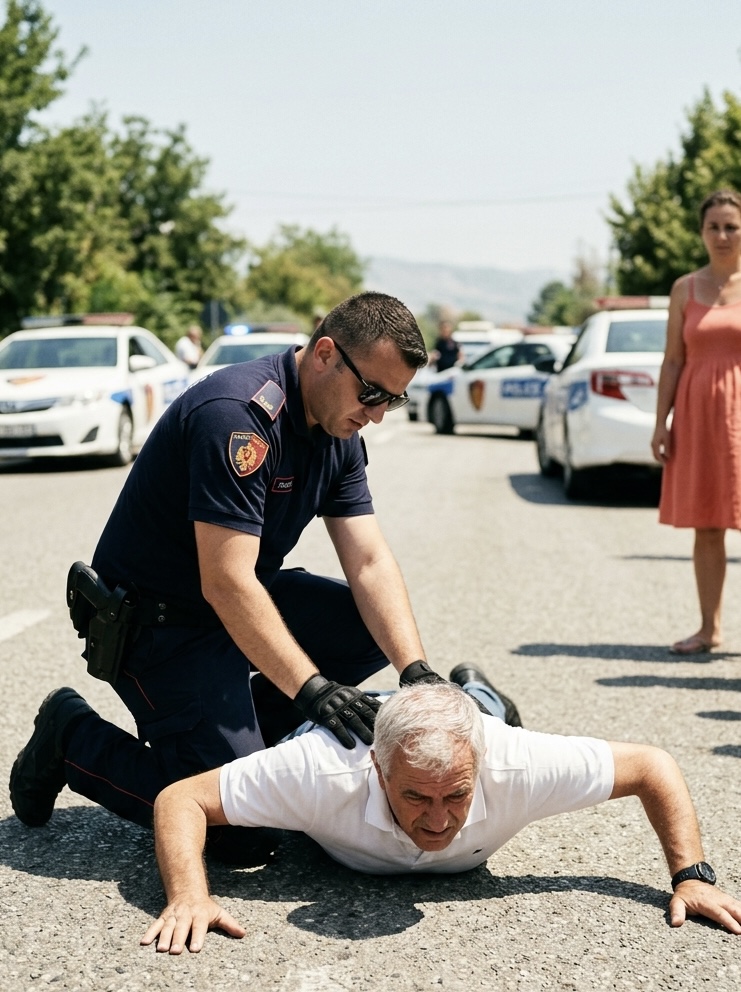
He’s volunteered at every charity ride, helped raise money for the children’s hospital, and mentored young veterans struggling with PTSD. Two weeks ago, your police force threw him face-down on burning asphalt for the crime of riding while old.”
I held up Janet’s son’s video on my phone. “I have footage of the incident.
I have seven other riders willing to testify about similar harassment. And I have a question for this council: Is this the message you want to send to the veterans in our community? That their service means nothing if they choose to ride motorcycles?”
One by one, others spoke.
Dr. Reeves presented statistics on motorcycle therapy for PTSD. Veterans shared stories of how riding saved their lives.
My nephew calmly outlined the potential lawsuits the city faced if the harassment continued.
But the moment that changed everything was when 85-year-old Walter “Tank” Morrison struggled to his feet. Tank had lost both legs below the knee in Korea and rode a specially modified trike.
“I was born in this town,” he said, his voice raspy but strong. “Fought for this country.
Came home to build a business and raise a family here. Now you want to tell me I can’t ride because it bothers some newcomers? You want your cops threatening men like Harold Mitchell?
Good men who’ve given everything?”
He paused, steadying himself on his cane. “I got news for you. We were here first.
We’ll be here when you’re gone. And we’ll ride until the good Lord himself tells us to stop. Not some badge-happy rookie who thinks harassment is good policing.”
The chamber erupted in applause.
The mayor gaveled for order, but the damage was done. The news crews Janet’s son had quietly alerted were getting it all on camera.
The mayor called for a recess. During the break, Officer Kowalski approached me.
Out of uniform, looking very young and very uncomfortable.
“Mrs. Mitchell,” he said quietly. “I owe you and your husband an apology.
I didn’t… I didn’t understand. My supervisor said these bikers were troublemakers, that we needed to send a message. I never thought about… about who they really were.”
I studied him for a moment.
“You told my husband he didn’t belong on the roads anymore.”
He winced. “I was wrong. Dead wrong.
If you’ll let me, I’d like to apologize to him personally.”
“That’s up to Harold,” I said. “But you should know something. That man you humiliated?
He earned a Bronze Star saving three of his squad members. He’s ridden over 500,000 miles without a single accident. He’s forgotten more about road safety than you’ll ever learn.
Next time you see an old biker, maybe remember that.”
When the meeting reconvened, the mayor quietly announced that the noise ordinance proposal was being withdrawn for “further study.” He also announced a new initiative to improve police-community relations, starting with mandatory training on interacting with elderly residents and veterans.
It wasn’t everything, but it was a start.
I drove home feeling victorious but also apprehensive. I hadn’t told Harold about any of this, and I wasn’t sure how he’d react.
I found him in the garage, but this time he wasn’t just sitting. He was working on his bike, changing the oil.
The first maintenance he’d done since the incident.
“Heard on the news there was quite a turnout at the city council,” he said without looking up. “Seems someone organized the whole riding community.”
“Oh?” I said innocently. “That’s nice.”
He chuckled, the first real laugh I’d heard from him in two weeks.
“Tank called. Said my wife gave them all hell. Said you reminded him of a drill sergeant he knew in Korea.”
“Tank exaggerates,” I said.
Harold stood, wiping his hands on a shop rag.
“Dr. Reeves called too. And Walter’s son showed me some video from the meeting.” He pulled me into a hug, oil-stained hands and all.
“Thank you.”
“I couldn’t let them win,” I said into his chest. “Couldn’t let them make you feel like you don’t belong on those roads. You’ve earned every mile, Harold Mitchell.”
He pulled back to look at me.
“Kowalski left a message. Wants to apologize.”
“What are you going to do?”
Harold considered this. “Might invite him for a ride.
Show him what responsible motorcycling actually looks like. Kid needs education, not revenge.”
That was my Harold. Even after everything, still thinking about teaching rather than retribution.
“So you’re not hanging it up?” I asked.
He glanced at his bike, then back at me.
“Had a weak moment. Let that young cop get in my head. But you know what?
I’ve been riding longer than he’s been alive. These roads know my name. Every mile has a memory.”
He walked over to his bike, ran his hand along the tank.
“This machine and I have been through too much to let some small-minded people decide when we’re done. I’ll hang it up when I’m ready, not when someone else decides I should.”
The next morning, I woke to the sound of Harold’s bike starting up. I looked out the window to see him in full gear, preparing for his morning ride.
As he pulled out of the driveway, he gave the throttle a little extra twist – not enough to be obnoxious, just enough to announce that Harold Mitchell was back on the road where he belonged.