When I moved into that quiet suburban street three years ago, I had no idea I was moving two houses away from a woman who would one day change everything I thought I knew about my family.
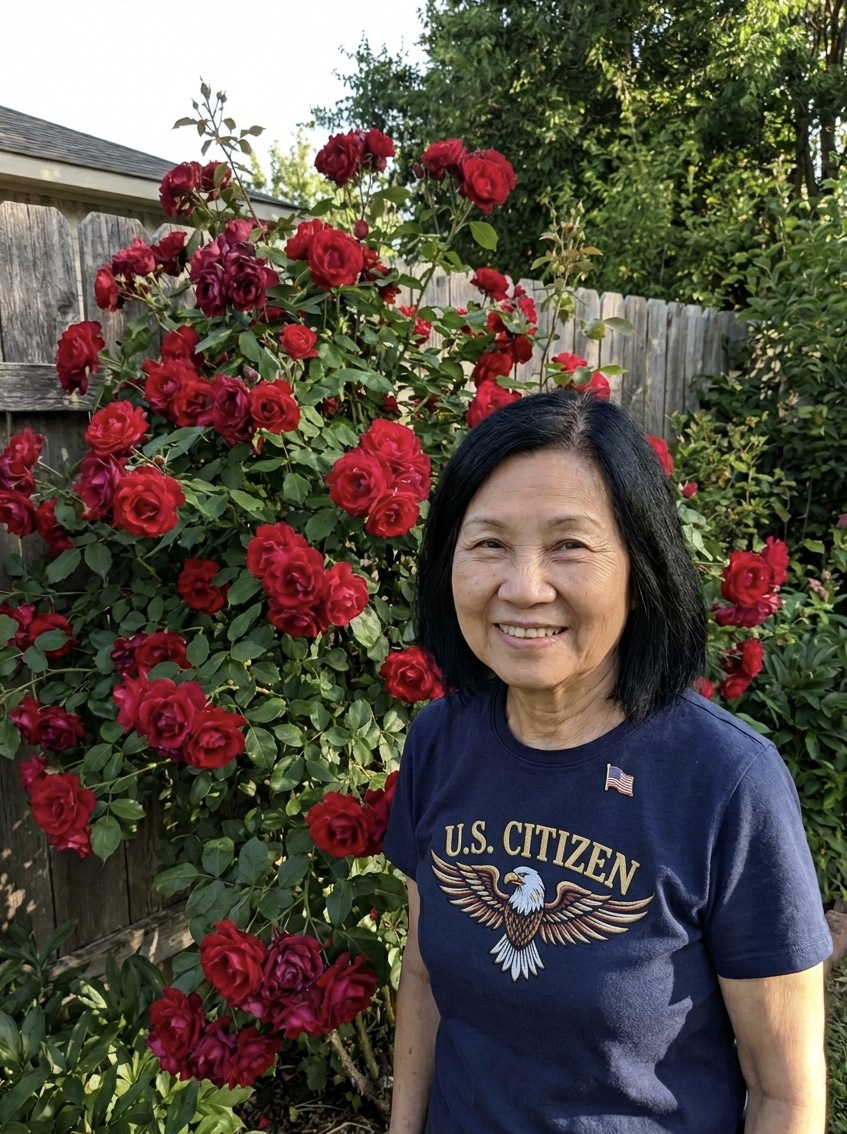
Mrs. Whitmore appeared on my porch within forty-eight hours of my arrival, carrying a blueberry pie that was still warm and smiling as if she had been waiting years for me to show up. She was seventy-five then, elegant in a soft, old-fashioned way, with carefully set hair, neat cardigans, and a yard so perfectly tended it looked like every flower had been placed there with intention.
She lived in a little white house with immaculate flower beds and a porch that always seemed to catch the afternoon light just right.
Before long, she became one of those rare neighbors who slips quietly into your life until it feels strange to remember a time before them. We talked over the fence. She waved when I came home from work.
Sometimes she invited me over for coffee, sometimes I brought her soup, and once in a while we shared long conversations that drifted from the weather to books to memories she only half-told.
There was one thing about her property, though, that never quite fit.
At the back of her yard, half-hidden behind the fence line, stood an old shed with a rusty padlock on the door. It looked strangely neglected beside everything else she cared for so beautifully. The roof sagged a little.
The paint was faded. The lock was always in place.
I asked her about it once, lightly.
She smiled, but the smile never reached her eyes.
“Oh, just old things,” she said. “Nothing worth bothering with.”
And that was that.
Mrs.
Whitmore died four days ago, quietly in her sleep.
She was seventy-eight.
The church service was small—mostly neighbors, a few distant faces I didn’t recognize, and the sort of soft sorrow that settles over people who had all been touched by the same gentle life. I stood outside afterward, still holding the folded program, when a girl of about eleven walked straight up to me.
“Are you Amber?” she asked.
“I am.”
She held out a small envelope. “Mrs.
Whitmore told me to give you this today. On the day of her funeral. She said it had to be today.”
Before I could ask anything else, she slipped back into the crowd and disappeared.
My name was written across the front in Mrs.
Whitmore’s careful, old-fashioned handwriting. I opened it right there on the church steps.
A small key fell into my palm.
Then I unfolded the note.
“Amber dear, I should have kept this a secret even after my passing. But I can’t.
You must know the truth I’ve kept from you all these years. You will understand everything when you open my shed.”
I stood there with the key in one hand and the note in the other, the whole world seeming to tilt slightly beneath me.
I knew I wasn’t going home until I opened that shed.
That evening, I let myself into her backyard through the side gate. The flower beds were still tidy, the yard quiet in a way that felt heavier now that she was gone.
Up close, the padlock on the shed looked even older than I remembered, brown with rust and thick enough to suggest it had protected something important for a very long time.
I slid the key in.
It turned on the second try.
The door opened with a low groan.
The smell hit me first—dust, cool air, something faintly earthy like clay left to dry. The inside was dim except for the weak light spilling through the doorway. Most of the objects were covered with white sheets, but in the center of the room stood something larger than all the rest, hidden beneath its own draped cloth.
It was human-shaped.
About my height.
Perfectly still.
For a long moment, I couldn’t move.
Then I walked toward it, grabbed the edge of the sheet with both hands, and pulled.
I screamed.
I stumbled backward so hard I nearly fell, and before I could even think, my phone was in my hand.
“911? There’s something here. I need help.”
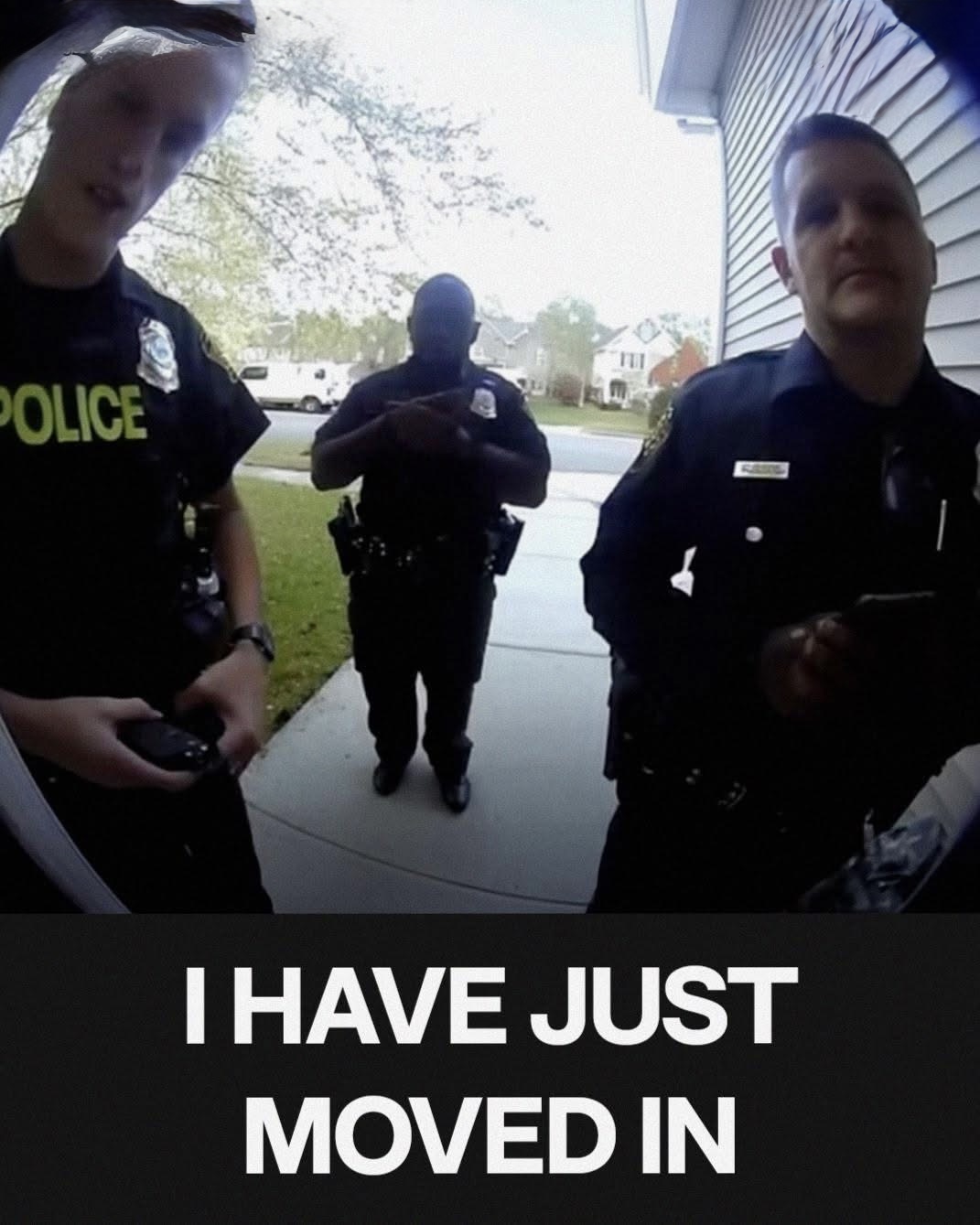
The officers arrived quickly.
One of them went in first, pulled the sheet back fully with a flashlight, then turned toward me with an expression that was almost apologetic.
“Ma’am,” he said, “it’s a sculpture.”
I stepped inside again, slower this time.
He was right.
It was a life-sized figure lying on a long worktable, sculpted from wax and plaster with such haunting precision that from the doorway it had looked like a body. The features were delicate, detailed, painstakingly formed.
And the face looked like mine.
I stood staring at it while something cold moved through me.
The officers, satisfied there was no danger, left after I apologized for the panic. But once I was alone again, I turned back to the workbench.
There were sketches everywhere.
Dozens of them.
Some were stacked neatly, others rolled and tied with string, all of them done in careful pencil.
I picked up the first one and felt my breath catch. It was a drawing of a young woman’s face, detailed enough to feel alive.
It was my face.
Or almost.
Then I noticed the date in the corner.
March 12, 1995.
I stared at it.
That was thirty-one years ago.
I picked up another. Then another.
The same face appeared again and again, slightly different each time. Younger in some. Older in others.
Tilted in profile. Laughing faintly. Looking down.
Looking straight ahead. It was as if someone had been trying to imagine a whole life for one face over the course of decades.
And the more I looked, the more something else began to emerge.
The face also looked like my mother.
Then I found an envelope tucked beneath the sculpture’s head, flattened against the table. My name was written on it.
Beside it was a small stack of faded photographs from the early 1990s.
I lifted the first photo toward the doorway light.
Two women smiled at the camera, their arms around each other. One was clearly a younger Mrs. Whitmore, with darker hair and the same familiar eyes.
The other woman was maybe twenty, laughing at something just off-frame.
She looked exactly like my mother at that age.
A memory came back to me so suddenly it felt like being tapped on the shoulder. A few weeks after I moved in, I had been showing Mrs. Whitmore something on my phone and accidentally swiped to a photo of my mother.
“That’s my mother, Jeanne,” I had said casually.
Mrs.
Whitmore had gone very still.
She looked at the screen a beat too long.
At the time, I thought nothing of it.
Now I opened the letter.
Mrs. Whitmore wrote that she had known her health was failing and had arranged for the envelope to reach me through a young girl she met at the hospital. She said I deserved the truth, even if she no longer had the courage to tell me face-to-face.
Then I reached the line that made my knees give out beneath me.
“Amber, you are my granddaughter.
I knew it the day you showed me your mother’s photo on your phone. You have her face, and your mother is my daughter.”
I sat down on the dusty floor of that shed, unable to breathe properly.
Mrs. Whitmore was my grandmother.
She had known.
And for three years, she had lived two houses away from me, smiled at me, fed me pie, waved from her porch, loved me quietly—and never said a word.
I needed answers.
I drove straight to my mother’s house in the city, the photographs on the passenger seat and the letter trembling in my coat pocket.
She was in the kitchen when I arrived. The second she saw my face, she set down what she was holding.
I placed the photographs on the table.
She looked at the first one and went completely still.
“Where did you get this?” she asked.
“From Mrs. Whitmore’s shed,” I said.
“She left me a letter. She said she was your mother. She said I’m her granddaughter.”
My mother’s hand went to her mouth.
I sat down and waited.
The truth came slowly, painfully, as if each part had to be pried free from years of silence.
Mrs. Whitmore and her husband had adopted my mother as an infant and raised her as their own. They loved her fiercely.
But when my mother was young, everything fell apart at once. My grandfather became ill. He wanted to see her married while he was still well enough to be there.
The pressure became unbearable.
And my mother was in love with someone they didn’t know.
So she ran.