My teenage son posted one photo of something he found in our attic. By midnight, the sound of motorcycles filled our quiet cul-de-sac, much to my shock.
I’m Maris, 41F, basic cul-de-sac, bored HOA, nosy neighbors included.
At 12:08 a.m., I woke up to the low rumble of motorcycle engines.
At first, I thought it was in my head.
Then the vibration rolled through the walls and into my ribs.
I sat up, heart pounding.
I hate that sound.
My husband rode a bike.
He’s dead.
His name was Kael, road name Ridge. He wasn’t some idiot doing wheelies on the freeway. He was the guy who stopped for broken-down cars, who brought food unasked when people were struggling.
He died on a ride when our son, Cai, was a baby.
After that, every engine sounded like bad news aimed at me.
I got out of bed, went to the front window, and lifted the blinds.
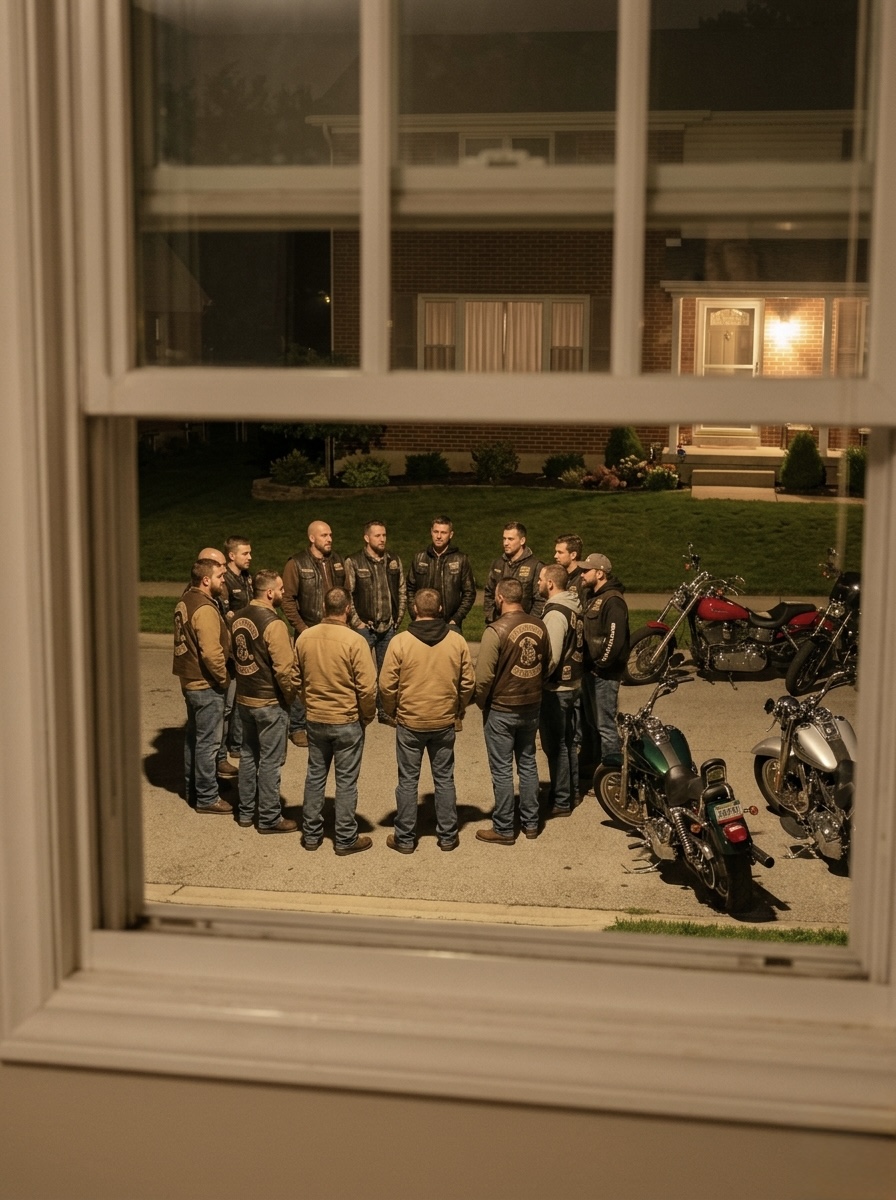
My quiet street was full of motorcycles.
Not one or two—rows.
Fifteen, 20, maybe more, lined up along my curb.
Engines clicked off. Kickstands dropped. Helmets came off.
Men and women in leather vests stood under the streetlights.
They weren’t talking.
They were looking at my house.
At the second-floor window.
Cai’s window.
My mouth went dry.
I grabbed my phone, thumb hovering over 911.
The doorbell rang.
One calm, normal press.
Like they figured I’d answer.
I should’ve called the cops.
Instead, I stomped downstairs in an oversized T-shirt and socks, yanked the door open, and snapped:
The man in front was huge. Broad shoulders. Gray beard. Tired eyes. He stood at the edge of my porch, like he wouldn’t cross it without permission.
He slowly took off his helmet and raised both hands.
“Ma’am,” he said. “We’re not here to hurt anybody.”
I gave a short, humorless laugh.
“Then move your bikes. People are sleeping.”
He didn’t argue. He pulled his phone out and held it up.
“Your son posted something on Facebook tonight,” he said. “It… hit a lot of people hard.”
“My son doesn’t post,” I said. “He barely texts.”
He flicked his eyes past me toward the stairs, then turned the screen around.
It was a photo.
Cai’s bedspread. Our tan carpet. And on the bed, laid out like something sacred, a leather vest.
Across the back: SECOND SHIFT RIDERS.
Below that, in white thread:
RIDGE.
My husband’s road name.
My hand tightened on the door frame.
That vest had been in a bin in the attic for over a decade, buried under Christmas decorations.
“You have the wrong house,” I said, even though I knew he didn’t. “My son couldn’t have posted that.”
A hand landed on my shoulder.
I turned.
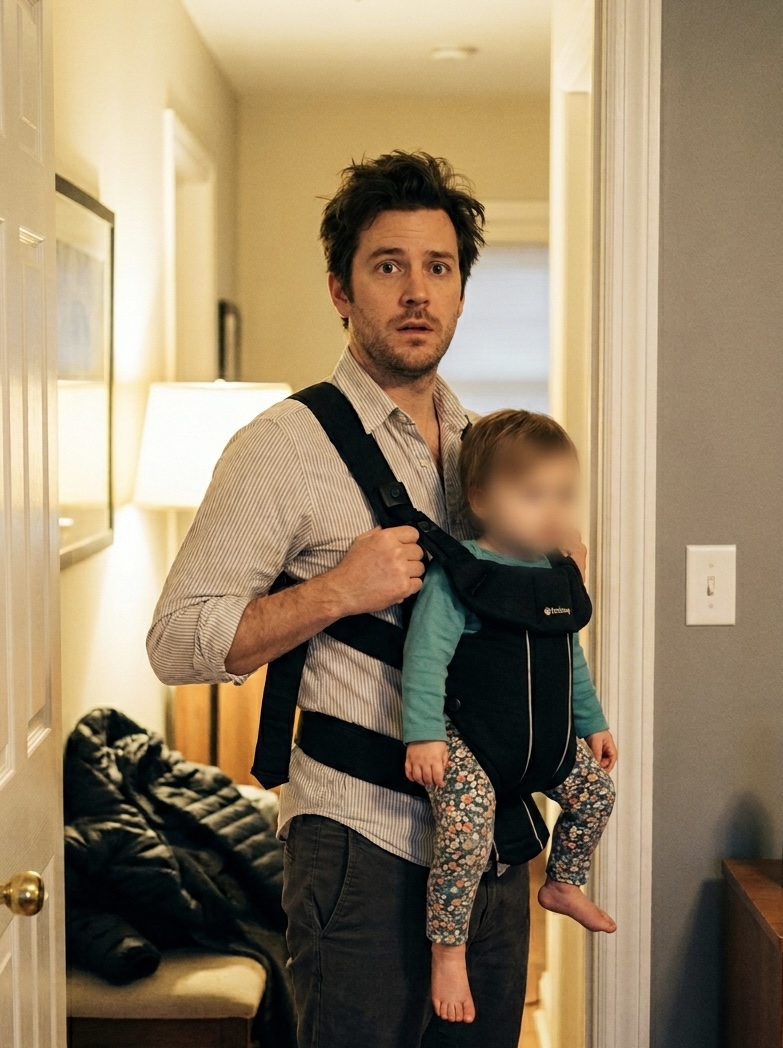
Cai stood halfway down the stairs. Sixteen. Barefoot. Hoodie. Pale.
“Mom,” he said quietly. “You should hear them out.”
The biker watched us, patient.
“I’m Gideon,” he said. “Most folks call me Gearbox.”
He tapped the patch on his vest. Same club name as on the one in the photo.
“We rode with Ridge,” he said. “We were his people.”
The words hit like a punch and a hug at the same time.
Behind him, more riders waited. A woman with dark braids. A giant guy with “Tank” stitched on his chest. A couple in vests over scrubs.
Across the street, a porch light flipped on. Blinds moved.
“You can’t just show up here,” I said, but my voice had lost its bite.
Gearbox nodded once.
“I get it,” he said. “Can a couple of us come inside and explain? I’d rather not talk about your family in the yard.”
Cai’s fingers tightened on my sleeve.
“Please,” he whispered. “I just wanted answers.”
That was the part that hurt.
I stepped back.
“Two of you,” I said. “Shoes off.”
Gearbox actually smiled a little.
He stepped in and kicked off his boots. The braided woman followed, slipping out of her Converse.
“I’m Delsey,” she said softly. “Thank you for opening the door.”
I shut the door. The engines stayed off. The house suddenly felt small.
We moved to the living room. They stayed standing.
Gearbox looked toward the stairs.
“Cai?” he called. “You’re not in trouble. We’re here because of your post.”
Cai came down, arms crossed tight.
“I didn’t mean for all this,” he blurted. “I didn’t think anyone would actually come.”
I stared at him.
“What did you do?” I asked.
He swallowed.
“I found the vest,” he said. “In the attic. When you sent me up for the Christmas stuff.”
Of course.
“I took a picture,” he went on. “The patch said Second Shift Riders, so I looked it up. There was a Facebook group. I posted the photo and asked if anyone knew who ‘Ridge’ was.” His voice dropped. “I wanted to know if you were telling the truth, or just… making him sound better because he’s dead.”
That one landed hard.
Delsey’s eyes softened.
“We’ve been trying to find you for a long time,” she told me. “We didn’t know where you moved.”
“I changed everything after he died,” I said. “Number. House. I didn’t want bikes anywhere near a baby.”
Gearbox nodded.
“We figured,” he said. “We’re not here to judge that. We lost him too.”
I crossed my arms so they wouldn’t see my hands shake.
“How did you get our address?” I asked.
“Your post blew up,” Gearbox said to Cai. “Lena recognized your comforter from a picture Ridge showed us. Someone else recognized your street. Somebody clicked your profile, saw your name, your age. We put it together.”
He shrugged.
“When your dead brother’s kid asks, ‘Did anyone know my dad?’ you move.”
Cai’s eyes filled with tears.
“So you actually knew him,” he said. “Not just the same three stories she tells.”
“I knew him,” Gearbox said. “I knew he’d give away his jacket in the snow. I knew he’d sing off-key on the bike. I knew he’d stop for every stranded car until we were late to everything.”
My eyes burned.
“Why are you here right now?” I asked.
Gearbox glanced at the front door and lifted his chin.
Tank stepped in just long enough to set a small metal lockbox on our coffee table, then backed out again.
The box was dented, old, with a simple latch.
Gearbox rested his hand on it.
“This was Ridge’s,” he said. “He gave it to our president fifteen years ago. Said, ‘If anything happens to me, you find my kid and give him this when he turns 16.'”
My chest hurt.
“Cai turned 16 last week,” I said.
“Yeah,” Gearbox said. “We saw.”
Cai sat on the edge of the couch, staring at the box.
He looked at me.
“Am I allowed?” he asked.
The fact that he felt he had to ask killed me.
“Yes,” I said. “It’s yours.”
He flipped the latch.
Inside were three envelopes, yellowed at the edges.
Same handwriting on each.
FOR WHEN YOU TURN 10
FOR WHEN YOU TURN 13
FOR WHEN YOU TURN 16
Cai’s fingers hovered over the last one.
“He really wrote these?” he whispered.
“Wouldn’t shut up till we promised,” Gearbox said.
Cai opened the sixteen envelope.
He unfolded the paper and read.
His eyes moved fast, then slowed. His mouth trembled.
“What does it say?” I asked.
He sniffed.
“He started with a dumb joke,” Cai said. “‘If you’re reading this, you survived being fifteen, which is more than I can say for some people I knew.'”
Gearbox smiled sadly. “Yep. That’s him.”
Cai wiped his cheeks and kept going.
“He said my laugh was his favorite sound,” he whispered. “He only heard it a few times but it stuck.”
My throat closed.
“He said he kept a picture of me in his wallet,” Cai added. “Showed it to strangers until they were annoyed.”
I could see that like a video in my head.
Then Cai’s eyes met mine.
“There’s a part about you,” he said.
My stomach dropped.
He scanned, then read, voice shaking:
“‘Your mom might hate bikes someday. If she does, it’s not because she hates me. It’s because she loved me so much losing me made everything loud.'”
I pressed a hand over my mouth.
Because that was exactly what happened, and he’d called it years before.
“I’m sorry,” I said to Cai. “I thought if I shut it all away, it wouldn’t hurt you.”
He stared at me, tears spilling.
“It hurt anyway,” he said. “I just didn’t know why.”
That went straight through me.
Gearbox spoke quietly.